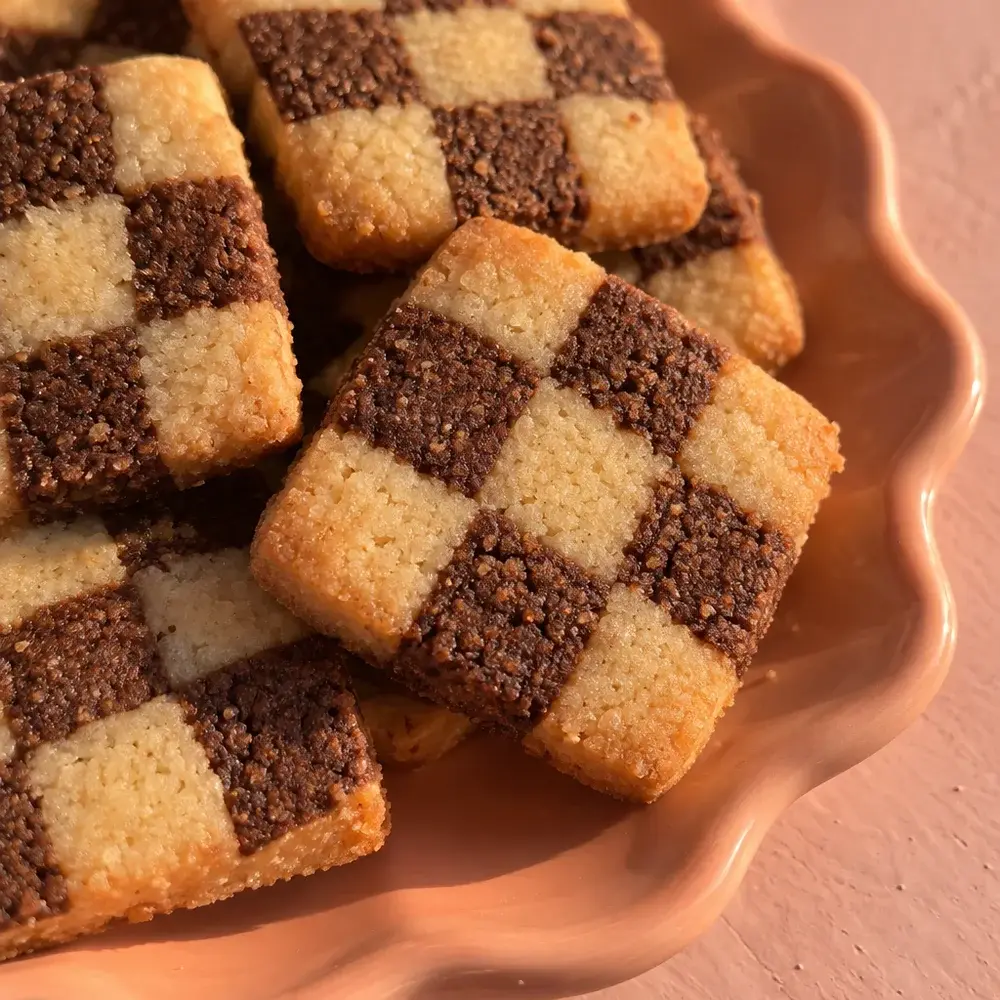

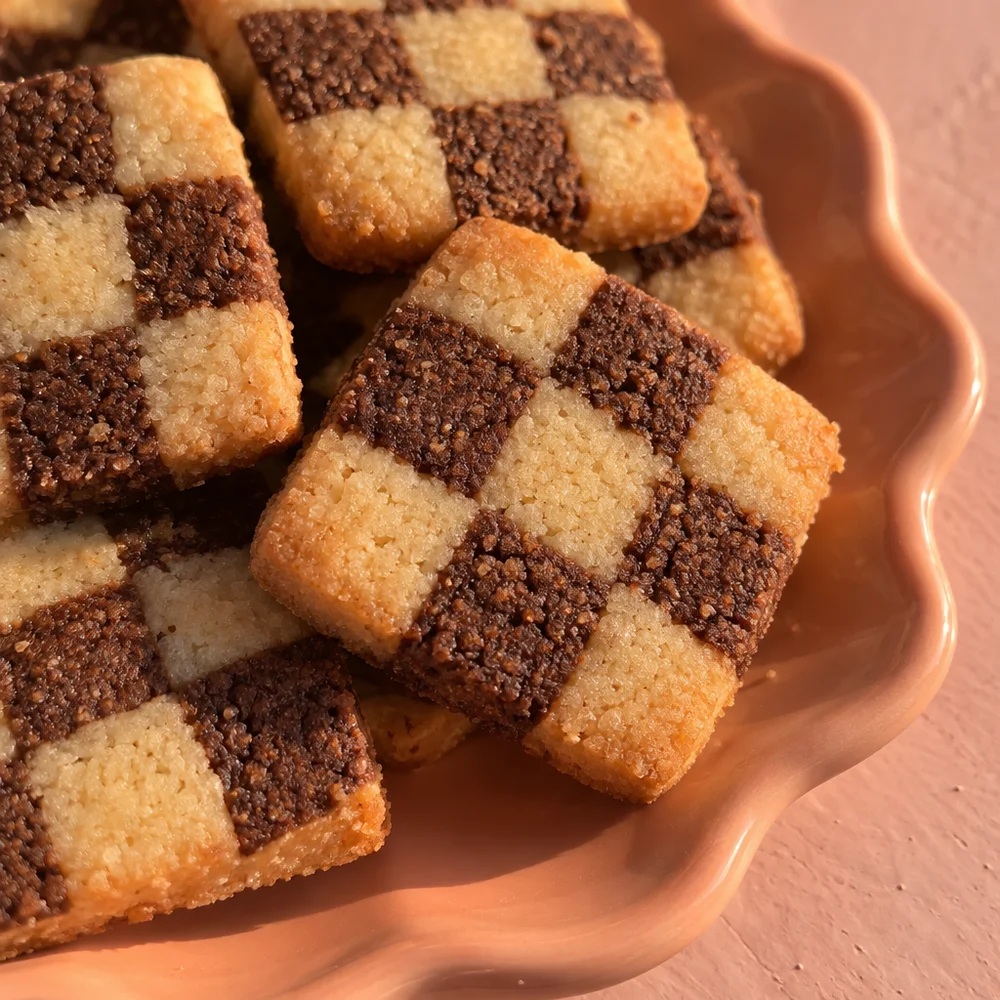
Low-FODMAP black and white cookies in a chequerboard pattern: vanilla dough made with rice flour, cocoa dough made with buckwheat flour, sweetened with maple syrup. No wheat, spelt or honey; about 90 cookies.
You’ll need: oven · baking tray · chopping board · knife · mixing bowl
With black and white cookies, the work only shows when you slice them. Here the dark dough gets buckwheat, which tastes nutty and full with the cocoa, while the light dough stays mild with vanilla. So the two doughs taste different too.
Buckwheat flour → rice flour (milder; the pattern then comes from the cocoa alone). Vanilla pod → grated zest of 1 unwaxed orange in the vanilla dough. Cornflour → potato starch. Butter → ghee (almost lactose-free). All swaps stay low-FODMAP.
Slice the blocks in one stroke with a dry knife so the pattern doesn’t smear. For spirals, roll out both doughs between baking paper to the same size, 3 mm thick, stick them together with a little egg white and roll them up using the paper.
Keeps for 3 weeks in a tin; the raw blocks keep for 3 months in the freezer.
Contains milk (butter) and egg; no nuts and no ingredients containing gluten – with coeliac disease, use buckwheat flour labelled gluten-free. Suitable for children and during pregnancy; cocoa contains a little caffeine.
Buckwheat flour is considered low-FODMAP in normal amounts, unlike wheat, spelt or rye. In this recipe every ingredient stays below the per-portion limits of our low-FODMAP rule, based on data from Monash University. What you tolerate is individual.
Cut both doughs into strips of the same thickness and stack them in three offset layers, brushing each layer with egg white. Sliced cold, the pattern stays sharp.