
SmarTasty
Count calories with a photo
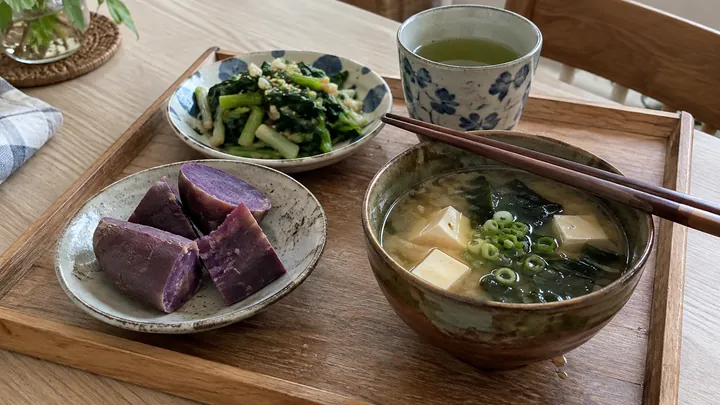
Longevity foods are the staples of long-lived regions: beans, veg, wholegrains, nuts, olive oil. Food list, example day and what research shows.
Longevity foods are the foods that turn up again and again where an unusual number of people reach a very old age: beans and lentils, vegetables, wholegrains, nuts, olive oil and fermented foods. Eating for longevity means building your everyday meals around them – it looks a lot like the Mediterranean diet. There are no miracle foods on the list, and no single food has been shown to turn back the clock.
The Blue Zones are five regions made famous by author Dan Buettner, where an unusual number of people reach a very old age. These are observations: food is only one factor there, alongside everyday movement, community and genes.
The five Blue Zones Okinawa (Japan) · Sardinia (Italy) · Ikaria (Greece) · Nicoya (Costa Rica) · Loma Linda (USA)
On the plate, these regions have a lot in common:
How close a single recipe comes to this pattern is what our Blue Zones diet score shows – with what each region eats, real examples, the research and the debate about the age records.
Hara hachi bu. In Okinawa, the rule is to eat only until you’re about 80% full. A good everyday tip: eat slowly and stop before you feel stuffed.
One much-discussed area of research is autophagy (literally “self-eating”). It’s how a cell breaks down old or damaged parts and recycles them into new building blocks. Japanese cell biologist Yoshinori Ohsumi won the 2016 Nobel Prize in Physiology or Medicine for his discoveries about how it works.
Almost everything known about what sets it off comes from cell and animal studies. How much food influences autophagy in humans has hardly been studied yet.
For everyday life: Snack less and eat proper meals with breaks in between. That’s a good plan even without any autophagy promise.
These foods come up often in the diets of long-lived populations:
| Food | What’s in it |
|---|---|
| Extra virgin olive oil | The main fat in Mediterranean cooking, with polyphenols such as oleocanthal. Buying tips: the best olive oil. |
| Berries and pomegranate | Blueberries, aronia and pomegranate contain anthocyanins – coloured plant compounds that are studied as antioxidants. |
| Nuts and seeds | Walnuts (with omega-3), linseed and chia seeds provide unsaturated fatty acids and fibre. |
| Cruciferous veg | Broccoli, kale and Brussels sprouts contain mustard-oil compounds such as sulforaphane, which are being studied intensively. |
| Green tea and turmeric | EGCG in green tea and curcumin in turmeric are two plant compounds that researchers look at as possible autophagy triggers – so far mainly in the lab. |
| Fermented foods | Kimchi, sauerkraut, miso and natural yoghurt contain live cultures. More in our guide to fermented foods. |
No food on this list works on its own. In studies, what stands out is the overall way of eating.
Here’s what a day can look like:
Tip: Leave a longer break between dinner and breakfast, say 12 hours. It’s easy to fit into everyday life – whether it noticeably increases autophagy in humans is an open question. If you take medication for diabetes, are pregnant or have an eating disorder, talk to your doctor before leaving long breaks between meals.
Blue Zones-style recipes: beans, veg, wholegrains and nuts in everyday dishes
Olive oil, berries, leafy greens, beans and lentils, nuts, oily fish with omega-3, fermented foods such as kimchi and sauerkraut, and spices such as turmeric and ginger come up again and again. The common thread is a plant-forward way of eating with little processed food.
No. People in the Blue Zones do eat meat, but rarely and in small amounts. The focus is on vegetables, beans and lentils, and fish as the main sources of protein.
There’s a lot of overlap – two of the Blue Zones, Sardinia and Ikaria, are on the Mediterranean. But “longevity” isn’t a fixed concept, more an umbrella term. Of these ways of eating, the Mediterranean diet is the best studied.
No. The “Longevity Diet” is a specific plan by researcher Valter Longo that includes periods of fasting. Longevity foods, as we use the term here, simply means the foods that are common in long-lived regions – no fixed plan and no fasting rules.
In humans, that hasn’t been shown. Polyphenols, sulforaphane and spermidine are mainly studied in the lab and in animals. What makes sense is the overall pattern: plant-forward, with little processed food and little sugar.
At any age. These are everyday habits, not a programme with a start date – you can add more beans, veg and wholegrains to your meals at 25 or at 75.