With your consent, we use Google Analytics to improve SmarTasty. Data may be transferred to the USA. You can withdraw at any time. · Privacy
Fermented foods: what they are and how to choose them
AI image
Fermented foods like natural yoghurt, kefir, raw sauerkraut and kimchi contain live cultures – as long as they’re not heated. List, labels, example day.
4 kinds – fermented veg, dairy, tea and soya
1 place to look – the chilled shelf – where unpasteurised sauerkraut and kimchi are usually kept
3 meals – with live cultures in our example day
Fermented foods are foods that bacteria have turned sour – sauerkraut, kimchi, natural yoghurt, kefir, kombucha and miso are the best-known. Many of them still contain live cultures, as long as they haven’t been heated. Here’s what fermentation does to food, how to spot products with live cultures, and how to fit them into everyday meals.
What fermentation does to food
When food ferments, bacteria turn sugars into lactic acid. That keeps the food for longer, gives it a sour flavour and leaves live cultures in it – as long as nothing is heated afterwards.
Fermented foods list – and what to eat with them
Two things go well together on the plate: fermented foods with live cultures, and fibre-rich plants.
Fermented foods with live cultures
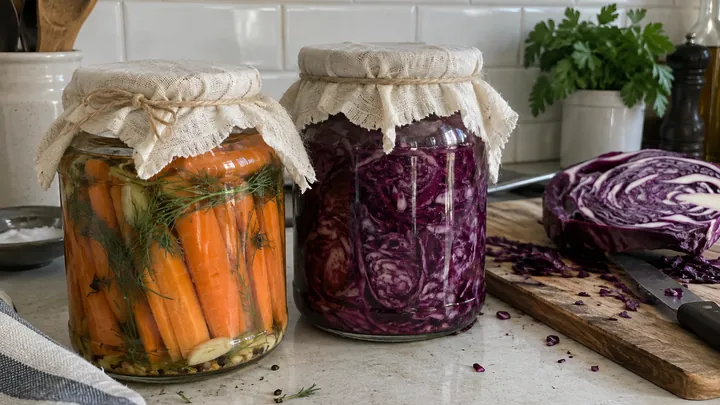
Fermented veg: fresh, unpasteurised sauerkraut and kimchi from the chilled section.
Fermented tea: kombucha – pick one with as little sugar as possible.
Soya: unpasteurised miso paste, stirred in rather than boiled.
Fibre-rich plants to go with them
Veg and roots: salsify, Jerusalem artichokes, parsnips, chicory, artichokes.
Onion family: garlic, onions, leeks.
Fruit: green bananas (resistant starch) and apples (pectin).
Grains and seeds: oats, ground linseed.
How to choose: look for live cultures
Shop the chilled section. Fresh sauerkraut, kimchi and miso with live cultures are usually sold cold.
Read the label. Look for ‘unpasteurised’, ‘raw’ or ‘live cultures’ – for yoghurt, ‘with live cultures’.
Jars and tins on the normal shelf are usually pasteurised, which means heated: the bacteria are no longer alive. The food still contains fibre.
Kombucha: check the label for sugar and pick one with as little as possible.
How to store and use them
Keep products with live cultures in the fridge, as they were in the shop. Heat kills lactic acid bacteria, so use them cold or add them at the end:
Stir miso into soup once it’s off the boil – don’t cook it with the rest.
Eat sauerkraut and kimchi raw, as a side or on top.
Use natural yoghurt and kefir cold – with breakfast or as a dip.
Example day with fermented foods and fibre
Here’s how live cultures and fibre come together in one day:
Breakfast: natural yoghurt or kefir with ground linseed, walnuts and half an apple.
Lunch: green salad with chicory and a side of raw, vegan kimchi.
Dinner: miso soup with tofu and wakame. Stir in the miso paste only once the soup is no longer boiling.
Tip: add fermented foods and fibre gradually. If you don’t usually eat much of them, you may get some wind at first.
Fermented recipes: recipes with sauerkraut, kimchi, kefir, miso and other fermented ingredients
Frequently asked questions
Does tinned sauerkraut contain live cultures?
Usually not. Sauerkraut in tins or jars from the normal shelf is usually pasteurised, which means heated – the bacteria are no longer alive. It still contains fibre. You’re more likely to find live cultures in fresh sauerkraut from the chilled section.
Can you cook fermented foods?
You can, but heat kills the lactic acid bacteria. Stir miso into soup at the end, once it’s no longer boiling, and eat sauerkraut or kimchi raw as a side.
Which fermented foods contain live cultures?
The best-known: natural yoghurt with live cultures, kefir, fresh unpasteurised sauerkraut and kimchi, unpasteurised miso and kombucha. Pasteurised versions from the normal shelf usually don’t.
What should I look for on the label?
Words like ‘unpasteurised’, ‘raw’ or ‘live cultures’, and a place in the chilled section. For kombucha, also check how much sugar it contains.