
SmarTasty
Count calories with a photo
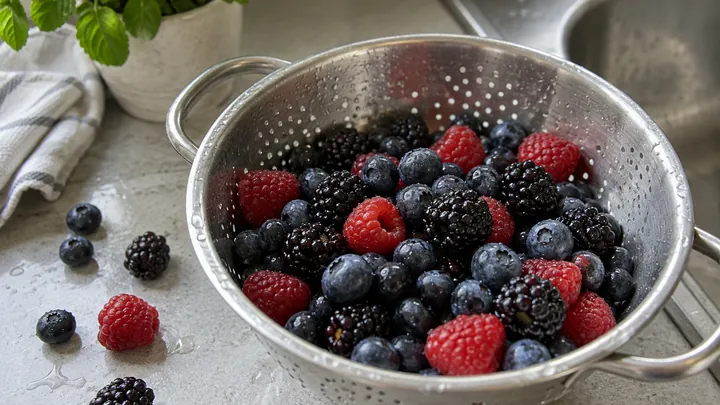
Our plant compounds score counts how many different groups of plant compounds a recipe contains – from berries and cocoa to cabbage, herbs and citrus.
Plants contain thousands of compounds that give them their colour, smell and bitterness – polyphenols in berries, cocoa and tea, carotenoids in carrots and tomatoes, glucosinolates in cabbage. Our score – shown on each recipe as “Plant compounds” – counts how many different groups of them a recipe contains.
Variety counts more than a single “top” ingredient: four groups give an extra point, six give two. For recipes at the top of the scale, see recipes with lots of plant compounds.
| What’s in the recipe | Points |
|---|---|
| Points added | |
| Berries, cocoa, green tea – blueberries, aronia, pomegranate, matcha | +3 |
| Cabbage, tomato & carrot, turmeric – also other berries, stone fruit, seaweed | +2 each |
| Citrus, nuts, herbs – sources of vitamins C and E, spices | +1 each |
| Variety – +1 from four groups, +2 from six | up to +2 |
| Vitamin C, vitamin E – from 60 mg or 4 mg per serving | +1 each |
| Points taken off | |
| High heat – grilling, searing | −1 |
Maximum 10 points. Shown on the recipe, but not part of the Health Score.
Recipes with lots of plant compounds: From 8.
Every recipe starts at 3. Three kinds from one group give +1 extra. Tiny amounts only count for spices, herbs and seaweed.
The score doesn’t measure how much of it your body takes up.
The score follows fixed rules, the same for every recipe. It doesn’t replace medical or dietary advice.
ORAC measures antioxidant capacity in a test tube. It says nothing about what happens in the body – that’s why the US Department of Agriculture withdrew its ORAC table in 2012. Variety is the more robust measure.
A large group of plant compounds, found for example in berries, cocoa, tea, coffee, olive oil, herbs and many vegetables. They give plants colour and bitterness. Our score counts them by food group, not by milligram.