
SmarTasty
Count calories with a photo
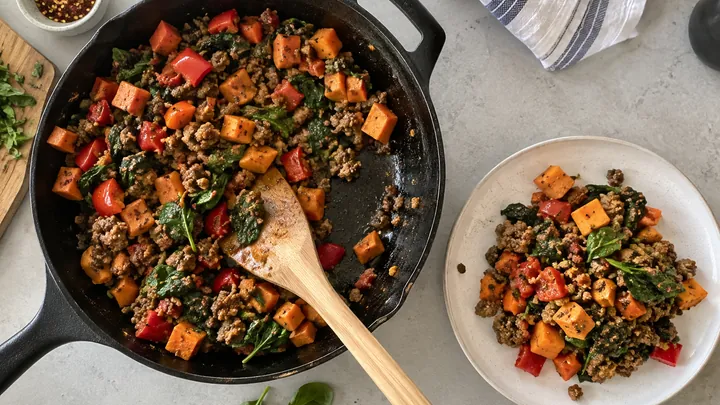
Paleo means meat, fish, eggs, veg, fruit, nuts and good fats – no grains, pulses, dairy or refined sugar. Food list, the 4 rules and paleo vs keto.
The paleo diet is built on meat, fish, eggs, veg, fruit, nuts and good fats – and leaves out grains, pulses, dairy, refined sugar and industrial oils. The question behind it: which foods were around before farming and the food industry changed what we eat? The idea is a bet – that the human body copes better with what it has eaten for hundreds of thousands of years than with what has only been on the plate for a few generations.
Paleo often sounds more complicated than it is. At its core, it comes down to four decisions:
What’s not on the list matters just as much: paleo doesn’t set a calorie target, a macro ratio or meal times. It’s about what goes on your plate, not how much.
These four terms often get mixed up. They describe different things, though – and only two of them can really be compared.
There’s essentially one difference: primal allows full-fat dairy – butter, cream, aged cheese, full-fat yoghurt. Otherwise the rules are almost identical. Primal also puts more weight on sleep, movement and sunlight, so it’s more of a lifestyle concept than just a way of eating.
In practice, if you eat paleo, you automatically eat primal too. It doesn’t work the other way round.
The two ask completely different questions. Paleo asks where a food comes from; keto asks about its macros. A paleo dish with sweet potatoes, honey and berries is fully paleo – and far from ketogenic.
A keto breakfast with cream and cheese, on the other hand, is ketogenic but not paleo. The overlap is big all the same: plenty of paleo recipes fit keto as well.
| Topic | Paleo | Keto |
|---|---|---|
| The question | Where does the food come from? | How many carbs does it have? |
| Grains and pulses | No | No (too many carbs) |
| Dairy | No | Yes, full-fat |
| Sweet potatoes, fruit, honey | Yes | No (small amounts of berries are fine) |
| What you count | Nothing – no calories, no macros | Carbs: usually 20–50 g a day |
Carnivore is the extreme version: only animal foods, no veg, no fruit. It shares paleo’s rule of no grains and no sugar – the rest is the opposite, because paleo puts lots of different veg front and centre. If you want to head in that direction without going to extremes, high-protein paleo meals with meat, fish, eggs and plenty of veg are a better fit.
Breakfast is the hardest part, because for many people almost everything at breakfast is based on grains or milk. Eggs with veg, berries with nuts or last night’s leftovers solve it more reliably than buying any substitute product.
There are a few controlled studies on paleo, mostly small and short. Some results have come up more than once, even without participants counting calories. That’s a real finding – but it doesn’t prove that the Stone Age reasoning behind it is right.
The likelier explanation is unspectacular: if you cut out grain products, sugar and ready meals, you automatically eat more protein, more veg and fewer highly processed foods. Few would argue with that. Whether you need the paleo story for it is another question.
Two points belong here in all honesty. Cutting out dairy can mean less calcium – leafy greens, sardines and almonds can fill the gap, but only if you plan for them (more in our dairy-free guide). And ruling out all pulses is the least well-supported part of the concept: based on what we know today, well-soaked lentils and chickpeas are no problem for most people.
Paleo recipes: everyday recipes without grains, pulses or dairy
No. Paleo allows sweet potatoes, fruit and honey and can be quite high in carbs. Many paleo dishes are low in carbs anyway, though, because bread, pasta and rice are out. If you want both, look for paleo recipes that are also low-carb.
For strict paleo, yes. If you want to keep butter and aged cheese, you end up with primal – the same basic idea, just with full-fat dairy. For most people, that’s the version that’s easier to stick to day to day.
It can be, but it doesn’t have to be. Grass-fed meat, wild fish and paleo substitutes like almond-flour bread push the price up. Eggs, seasonal veg, offal, beef mince and cooking ahead in batches keep it down.
Yes. Meat, fish and eggs already bring plenty of protein; as always, what counts is a slight calorie surplus. Without rice and oats, that takes a bit more planning – sweet potatoes, fruit and nuts fill the gap.
The first one to two weeks are the hardest, especially breakfast and eating on the go. After that it’s less about discipline than preparation: if you cook ahead at the weekend, your weekdays are easy.