
SmarTasty
Count calories with a photo
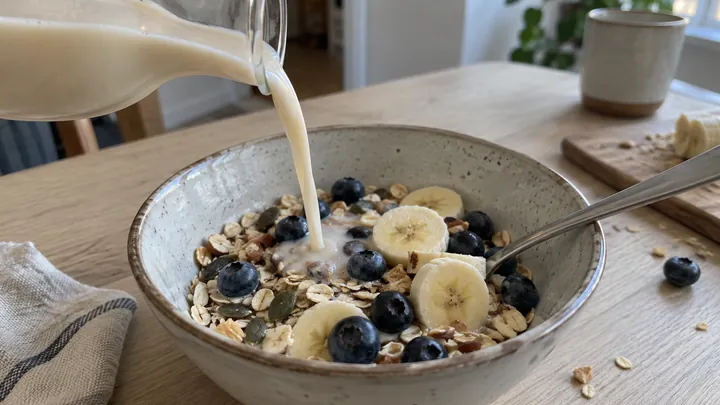
Dairy-free means no milk from any animal. With a milk allergy, that’s a must; with lactose intolerance, small amounts often work. Swaps and calcium tips.
A dairy-free diet leaves out milk and everything made from it. Whether it’s lactose intolerance, a milk allergy or personal reasons, cow’s milk is easy to replace day to day. The one thing to watch: that you still get enough calcium.
With lactose intolerance, your small intestine makes too little lactase – the enzyme that breaks down milk sugar (lactose). Most people with it can still handle up to about 12 g of lactose at once, aged hard and semi-hard cheeses like Emmental or Parmesan, and lactose-free products, according to the German consumer advice centres (Verbraucherzentrale).
A cow’s milk protein allergy is an allergic reaction to the protein in milk – casein or whey. Then you need to cut out milk completely, lactose-free milk included. For children, plan meals with a doctor or a dietitian.
Not sure which one applies to you? Get it checked by your doctor before you cut out milk for good.
Dairy-free or cow’s-milk-free? Dairy-free means no milk from any animal. Goat’s, sheep’s and buffalo milk products – goat’s cheese, feta, pecorino, buffalo mozzarella – are cow’s-milk-free, but not dairy-free. That’s how we label recipes too. If you have a milk allergy, talk to your doctor before trying them.
Cow’s milk is easy to replace in cooking, baking and coffee. According to the German Nutrition Society (DGE), plant drinks aren’t a full replacement for milk, though – so choose versions with added calcium.
| Instead of | Try |
|---|---|
| Whole milk (for coffee and muesli) | Soya, oat or almond drink with added calcium; barista versions froth better |
| Whipping cream or cooking cream | Oat or soya cream, thick coconut milk |
| Low-fat quark | Soya skyr or soya quark (lots of protein) |
| Natural yoghurt | Unsweetened soya or coconut yoghurt |
| Butter | Coconut oil for baking, olive oil for savoury doughs |
| Parmesan (for sprinkling) | Nutritional yeast – savoury and cheesy |
Common mistakes: using unsweetened organic drinks without added calcium as a milk swap. Mixing up “lactose-free” and “dairy-free” when you have an allergy. Overlooking sweetened drinks and yoghurts.
Dairy-free recipes: everyday recipes without milk, cream or cheese
From plant drinks with added calcium, mineral water with plenty of calcium (check the label), green veg like broccoli and kale, sesame (tahini) and almonds. Watch out: in the EU, organic plant drinks can’t be fortified with vitamins or calcium salts – some add calcium from seaweed (calcified algae) instead, many contain little calcium. Check the label.
Lactose-free milk is cow’s milk with the milk sugar already broken down. It still contains milk protein, so it’s not suitable if you have a milk allergy. Dairy-free means no milk or milk ingredients at all – from cows or any other animal.
Acid and heat make the plant protein clump, especially with soya and almond drinks in hot, acidic coffee. Use a barista version, let the coffee cool for a moment, or pour the drink into the cup first.