
SmarTasty
Count calories with a photo
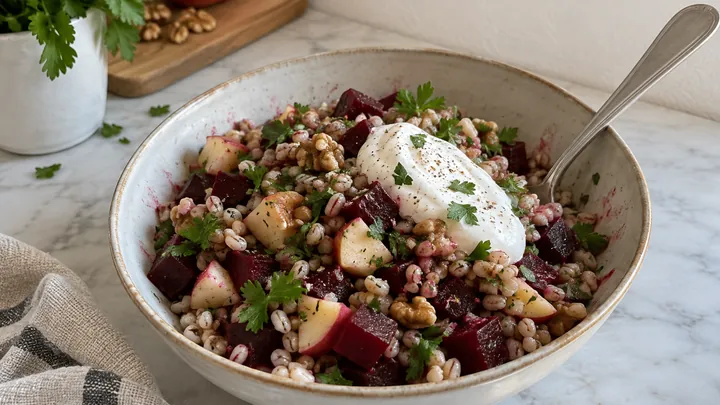
Our fibre & variety score counts fibre, the number of different plants and live cultures such as yoghurt or sauerkraut in a recipe.
The fibre & variety score – shown on each recipe as “Fibre & variety” – counts three things: how much fibre a serving contains, how many different plants are in it and whether it has live cultures such as yoghurt, kefir or sauerkraut.
Plant variety counts different vegetables, fruit, pulses, wholegrains and nuts. If you want to count your week, see 30 plants a week; more about fibre in our high-fibre guide.
| What’s in the recipe | Points |
|---|---|
| Points added | |
| Fibre – +1 from 4 g, +2 from 7 g, +3 from 10 g | up to +3 |
| Plant variety – +1 from 5, +2 from 8 kinds | up to +2 |
| Onion family, pulses & oats – onions, leeks, garlic, beans, lentils, oats | up to +2 |
| Live cultures – yoghurt, kefir, sauerkraut: raw +2, cooked +1 | up to +2 |
| Polyphenols – berries, cocoa, tea | +1 |
| Points taken off | |
| Additives – emulsifiers, ready-made products | −2 |
| Sweeteners, alcohol, processed meat | −1 each |
Maximum 10 points. Counts 15% towards the Health Score.
Recipes with fibre & variety: From 8.
Every recipe starts at 4. Plant variety counts different vegetables, fruit, pulses, wholegrains and nuts – tiny amounts don’t count.
No points off for milk, gluten or coffee: there’s no evidence for that in healthy people.
If you have digestive symptoms, a doctor or dietitian will help you more than a single score.
The score follows fixed rules, the same for every recipe. It doesn’t replace medical or dietary advice.
In the American Gut Project, people who ate more than 30 different plants a week had more varied gut bacteria than people who ate 10 or fewer. It’s an observation from a citizen science project, not proof of a health effect – but variety is easy to count and brings different kinds of fibre to the plate.
Different vegetables, fruit, pulses, wholegrains and nuts – each kind once, tiny amounts don’t count. Our 30 plants a week checklist lists them by group.