
SmarTasty
Count calories with a photo
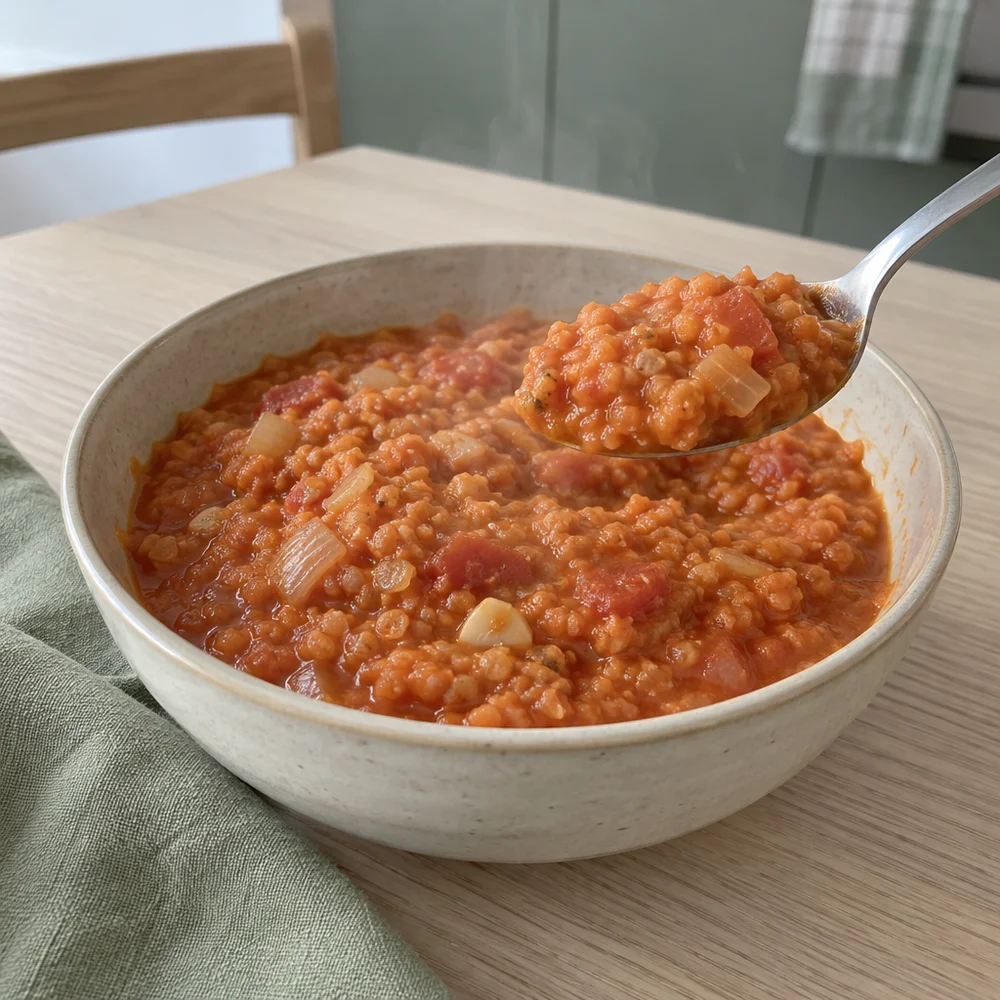
Red lentil dal with tomatoes, ginger, garlic, ghee and aromatic spices: creamy, spicy and easy for every day, with red lentils and Greek yoghurt.
You’ll need: saucepan · ladle
This dal is warm, soft and properly filling. It takes little effort but tastes like hours at the stove. Exactly the kind of food that goes well with a quiet evening.
Greek yoghurt → coconut yoghurt without added sugar (dairy-free) Vegetable stock → homemade stock or water with a few more spices (fewer additives and usually less salt) Tin of chopped tomatoes → fresh ripe tomatoes, diced (less processed) 1 tbsp ghee → 1 tbsp virgin coconut oil or a little more yoghurt to serve (no seed oils, a different source of fat)
Contains milk from the yoghurt and usually from the ghee too. Often suits children well if you reduce the chilli, and during pregnancy it's generally fine with well-heated ingredients and pasteurised yoghurt.
Red lentils contain notable amounts of iron, plus folate and magnesium. The iron is plant-based; the tomatoes bring a little vitamin C.
Tomatoes provide lycopene, potassium and vitamin C, among others. Lycopene is one of the carotenoids, and a relevant amount remains in cooked tomatoes too.
Not always. Garlic contains FODMAPs, which can cause discomfort if you have a sensitive gut or IBS; smaller amounts often cause fewer problems.
Ginger contains essential oils and pungent compounds such as gingerols. They give the dal its fresh heat.
Turmeric contains curcuminoids and gives the dal colour and flavour. It also gives the dal its typical earthy, slightly bitter note and warm yellow colour.