
SmarTasty
Count calories with a photo
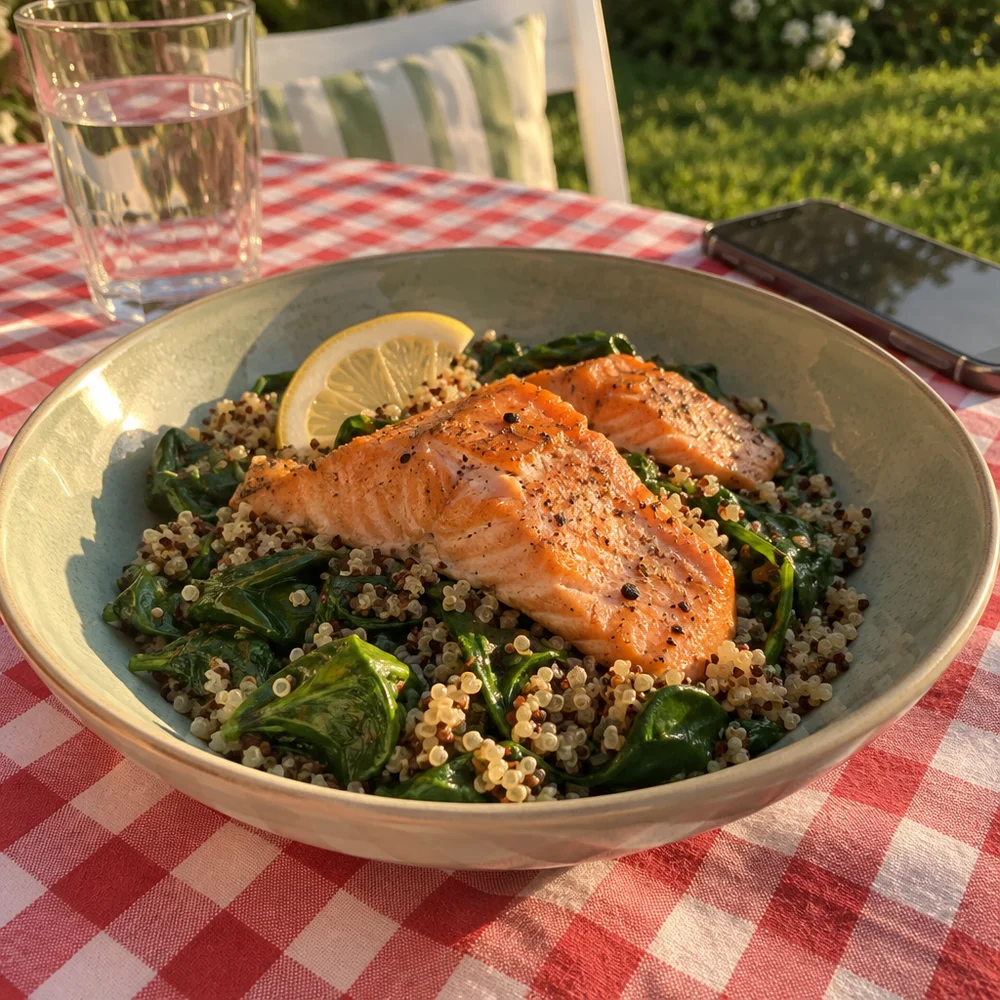
Oven-baked wild salmon with quinoa and spinach: an easy recipe with tender salmon, nutty quinoa, fresh baby spinach, lemon and olive oil.
You’ll need: oven · frying pan · saucepan · baking dish
An easy, honest oven dish for days when you want to keep things simple. It tastes bright and fresh and is pleasantly satisfying.
Wild salmon fillets → Arctic char fillets (similar protein content, provides omega-3 fatty acids, often available locally) Wild salmon fillets → mackerel fillets (more omega-3 fatty acids, stronger flavour) Quinoa → buckwheat (gluten-free, contains minerals such as magnesium) Baby spinach → kale (more vitamin C and K, more fibre)
This dish contains fish. During pregnancy, make sure the salmon is cooked right through – raw fish is best avoided. Quinoa, spinach and lemon contain none of the main allergens.
Wild salmon mainly contains EPA and DHA. These long-chain omega-3 fatty acids are found mainly in oily fish.
Quinoa provides magnesium, manganese and some iron, among others. The exact values vary with variety and growing conditions.
Baby spinach contains folate, vitamin K and carotenoids, plus smaller amounts of magnesium and potassium.
Mainly for flavour: the acidity freshens up the wilted spinach. It also adds a little vitamin C.