
SmarTasty
Count calories with a photo
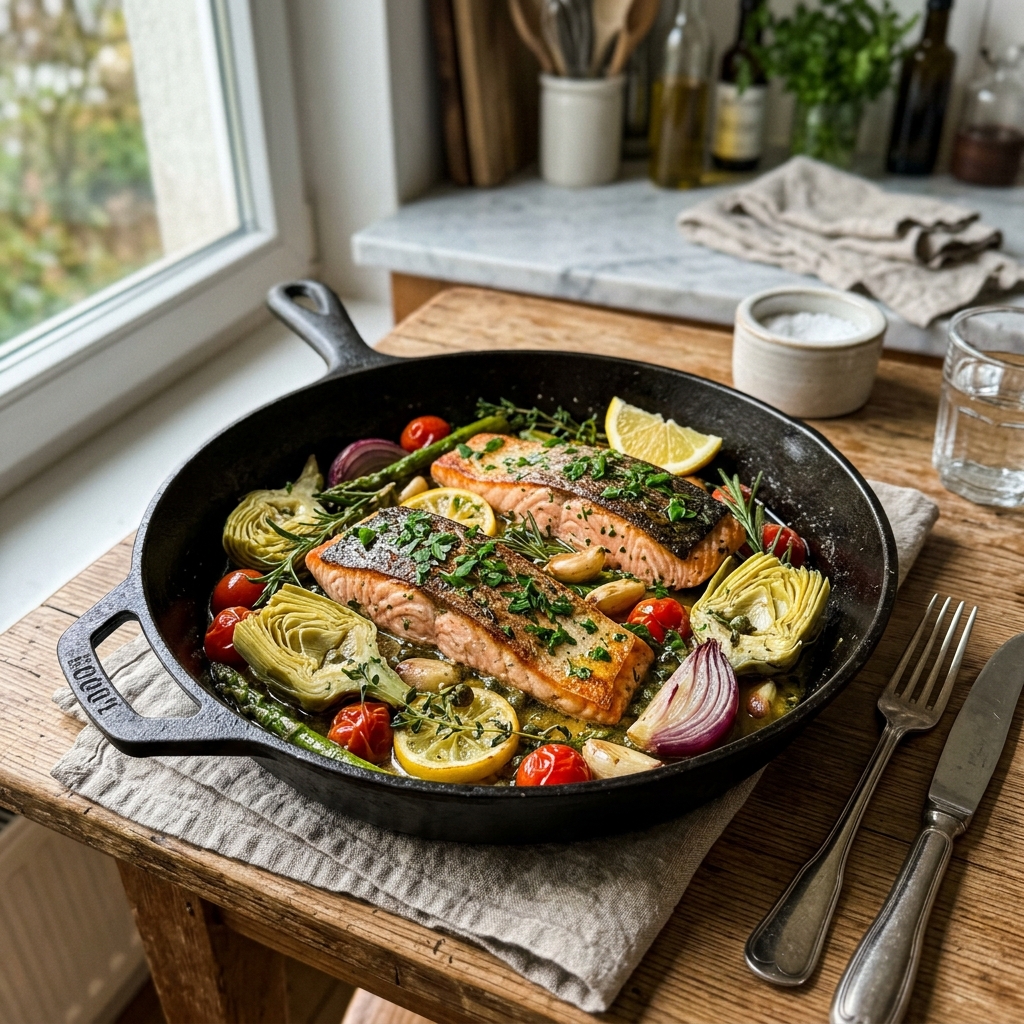
Low-carb wild salmon and artichoke pan with wild salmon, artichoke hearts, green beans, lemon and garlic – fresh, aromatic and easy for every day.
You’ll need: frying pan · chopping board · knife · sieve
When you want an easy evening, this pan is just right. Fresh, bright in flavour and pleasantly hearty. The acidity of the lemon makes it all especially lively.
Wild salmon fillet → Arctic char or trout (similar protein content, milder flavour, also omega-3 fats) Jarred artichoke hearts → fresh courgette or fennel (less processed, goes well with lemon) Green beans → green asparagus or broccoli (low-carb, with fibre and bite) Olive oil → avocado oil or ghee (heat-stable)
Contains fish. Green beans should always be cooked thoroughly. In pregnancy, wild salmon that's cooked right through, with no translucent centre, is the safe choice.
Wild salmon mainly contains the long-chain omega-3 fatty acids EPA and DHA. It also has smaller amounts of monounsaturated and polyunsaturated fats.
Artichoke hearts provide fibre and various bitter compounds as well as smaller amounts of potassium, magnesium and folate. The exact content depends a little on the variety and how they're preserved in the jar.
No, green beans shouldn't be eaten raw. They naturally contain substances such as phasin, which thorough cooking greatly reduces.
Lemon mainly provides vitamin C and organic acids. Here, both are mostly about the fresh flavour; there's a nutritional contribution, but it's usually not huge.
Not necessarily. Garlic and red onion contain FODMAPs, which can cause discomfort with a sensitive gut or IBS.