
SmarTasty
Count calories with a photo
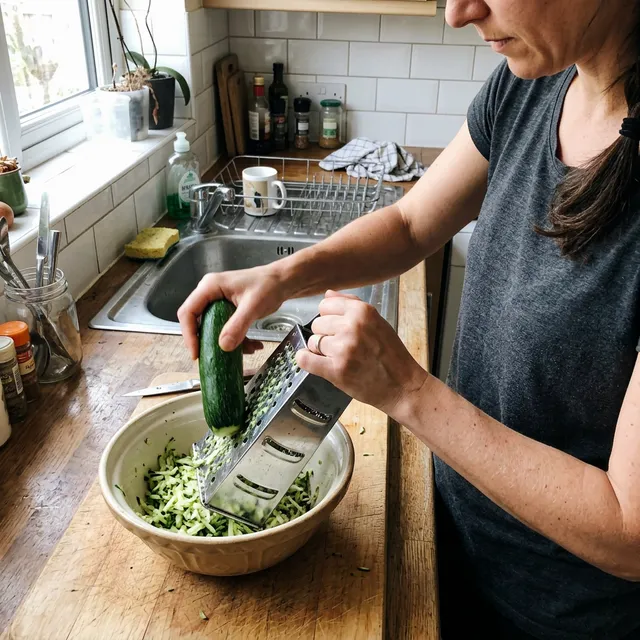
Low-carb one-pan courgette lasagne with courgette, tomatoes, ricotta and mozzarella or cheddar: hearty, with plenty of protein and quickly made in one pan.
You’ll need: frying pan · chopping board · knife · grater · wooden spoon
When you want the taste of lasagne with a lot less fuss, this pan dish is just right. Warming, hearty and on the table without much effort.
Ricotta → cottage cheese (more protein). Mozzarella → feta (stronger flavour, provides calcium; in pregnancy, made from pasteurised milk). Beef mince → turkey mince (a little leaner) or soaked soya mince (vegetarian; contains soya). Olive oil → ghee (heat-stable and full of flavour).
Contains milk (ricotta and cheese). Onion and garlic can be quite intense for sensitive children; in pregnancy, cook everything through thoroughly and use pasteurised dairy.
Courgette is mostly water and provides fibre plus smaller amounts of potassium, vitamin B6 and folate. It's mild, so it suits light, veg-packed dishes.
Tomatoes contain lycopene, vitamin C and potassium. Lycopene is a carotenoid. Here the tomatoes simmer with oregano before the courgette goes in.
Ricotta is usually milder and often moister than many hard cheeses. It provides protein and calcium, but still contains lactose and milk protein, which can matter if you have an intolerance.
Not with everyone. They contain FODMAPs such as fructans, which can cause wind or a feeling of pressure in the stomach in sensitive people.
Both provide protein and calcium, but they differ a little in water content and ripening. Mozzarella is often milder and moister, while cheddar is usually stronger in flavour and, depending on the type, a little more concentrated in fat and salt.