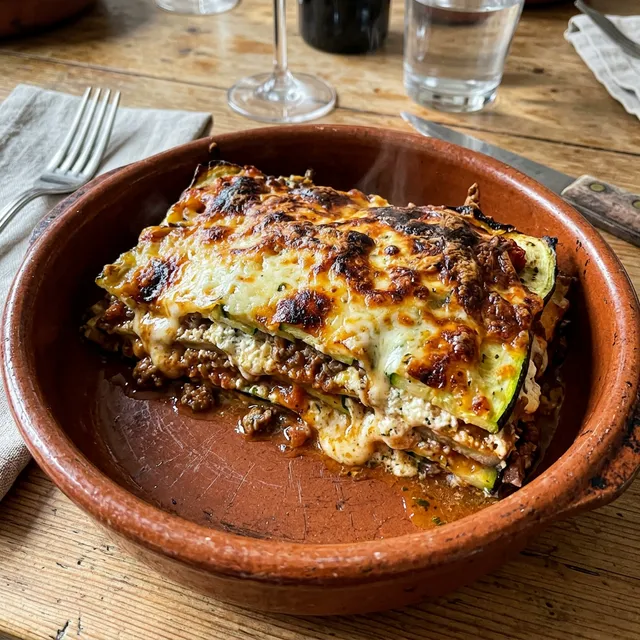
Slice the aubergine and courgette, salt lightly and leave to rest. Then pat off the liquid that comes out so the lasagne doesn't turn watery.
Soften the onion and garlic in olive oil. Add the beef mince, brown it well, then simmer for a few minutes with the passata, oregano, basil, salt and pepper.
Stir the ricotta with some of the mozzarella, salt and pepper until smooth. If needed, stir in just a tiny splash of milk.
First spread a little meat sauce over the bottom of a baking dish. Then layer aubergine, sauce, ricotta cream and courgette, and carry on until everything is used up; finish with ricotta cream on top.
Scatter the rest of the mozzarella and the parmesan over the top. Bake in the oven at 180 °C (160 °C fan) for 30–35 minutes until the top is golden brown and the lasagne is bubbling.
Let it rest briefly before cutting. That way it portions neatly and the layers hold together better.
Good to know
This lasagne is down-to-earth and still light. It has everything you love about oven bakes, just without the pasta sheets. And yes: it tastes even better the next day.
Swaps
Lean beef mince → grass-fed beef mince or turkey mince (a different fatty acid profile, or leaner)
Ricotta → cottage cheese or a skyr and cream cheese mix (more protein, usually less fat)
Mozzarella → buffalo mozzarella or a little more parmesan (stronger flavour, so you often need less)
Passata → unsweetened chopped tomatoes (less processed, more bite)
Allergens
Contains milk; tomatoes and aged cheese may be an issue if you're sensitive to histamine. Usually good for children, and fine in pregnancy with beef mince that's cooked through and pasteurised ricotta.
Frequently asked questions
What's in aubergines nutritionally?
Aubergines contain fibre and polyphenols, especially in the skin. The often-mentioned compound nasunin is an anthocyanin and part of what makes the skin purple.
Do courgettes suit a sensitive stomach?
Usually yes, because courgettes are mild and watery. Raw, some people find them harder to manage.
Why do tomatoes fit so well into this dish nutritionally?
Passata provides lycopene, potassium and some vitamin C, among other things.
What do ricotta, mozzarella and parmesan provide besides flavour?
The cheeses bring protein, calcium and phosphorus. Because it's aged, parmesan usually contains more concentrated minerals and also much more salt than ricotta.
Does beef mince contain iron?
Yes, beef mince provides haem iron, plus zinc, vitamin B12 and other B vitamins.