
SmarTasty
Count calories with a photo
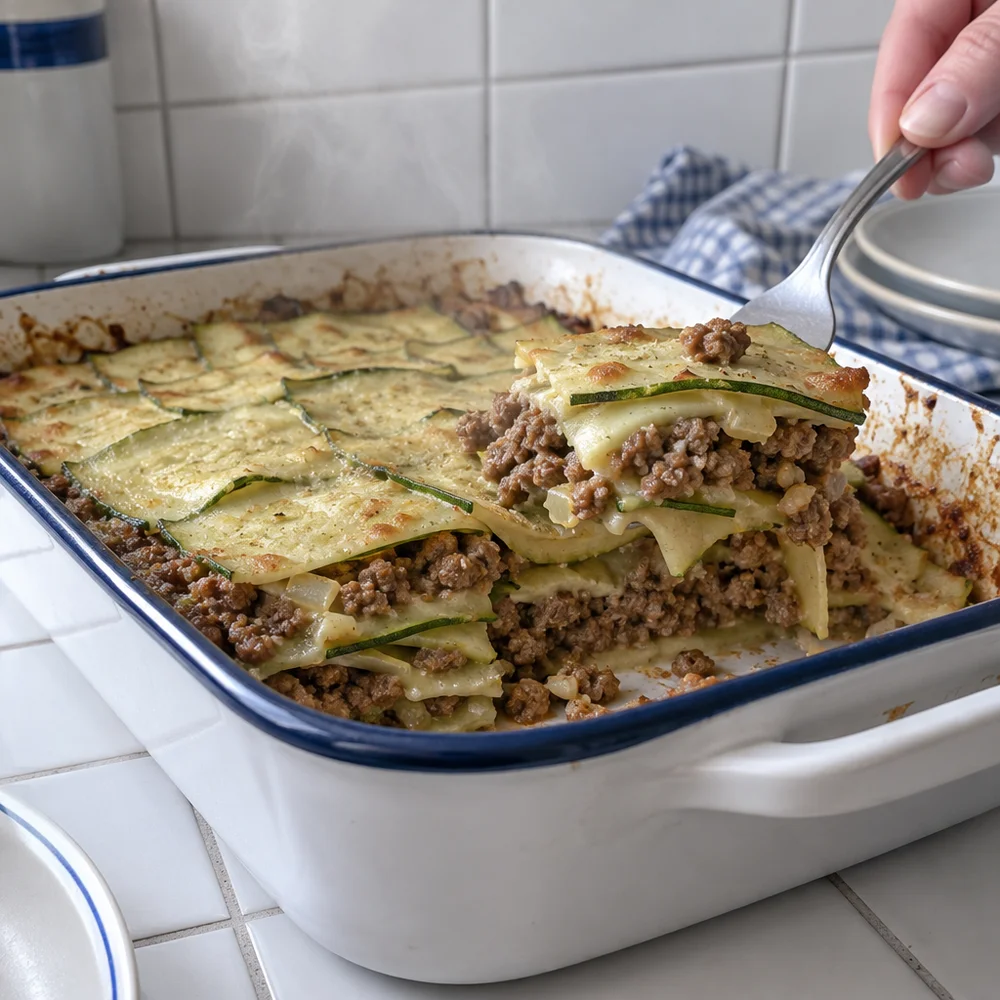
Low-carb courgette lasagne with beef mince, passata, mozzarella and parmesan: savoury, hearty and with lots of veg instead of pasta sheets.
You’ll need: oven · baking dish · chopping board · knife
If you love lasagne but fancy a version with courgette instead of pasta, this is a really good option. Juicy, savoury and full of flavour.
Lean beef mince → turkey mince or chicken mince (a little leaner, similar protein content) Mozzarella → buffalo mozzarella or cottage cheese (more flavour or more protein, depending on your choice) Passata → organic chopped tomatoes with nothing added (often less processed, more texture) Olive oil → avocado oil or ghee (heat-stable and no seed oils)
Contains dairy. Onion, garlic and tomatoes can cause discomfort if you have a sensitive stomach or IBS, and during pregnancy the dish is fine as long as the beef mince is fully cooked and the mozzarella is pasteurised.
Courgette contains potassium, vitamin C and smaller amounts of folate, among others. It's mostly water, so it adds volume without feeling heavy.
Passata provides lycopene, potassium and some vitamin C. Salt content varies by product, so it's worth checking the label.
Both contain fructans, which are fermentable carbohydrates. In sensitive people, they can lead to bloating or a feeling of pressure in the tummy, even though they're interesting nutritionally.
Parmesan provides concentrated calcium, phosphorus and protein. Thanks to its long ageing, it usually contains very little lactose.
That depends on the person. Mozzarella is a fresh cheese with milk protein and fat, but it usually contains less salt than strongly aged cheeses; if you're sensitive to lactose, how you react can vary.