
SmarTasty
Count calories with a photo
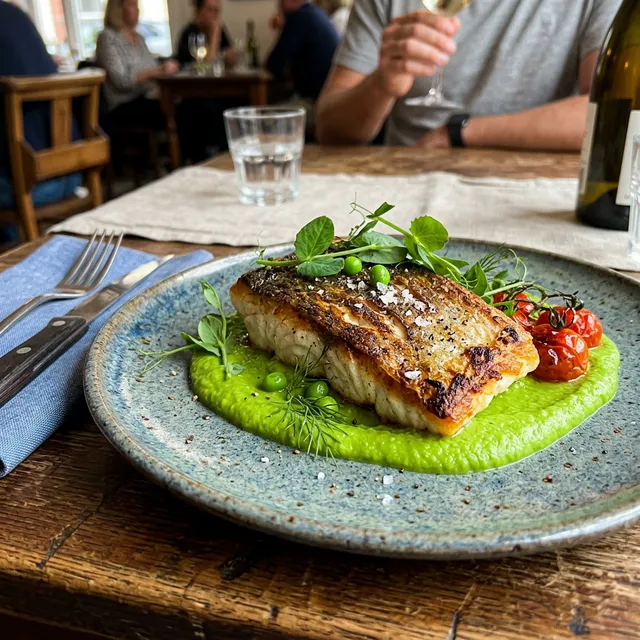
High-protein zander on pea purée: tender zander with young peas, lemon, mint and quark. A fresh, high-protein recipe with bright flavours.
You’ll need: frying pan · stick blender · chopping board · knife · grater
When you want something light but not boring, this dish is just right. Creamy, fresh and with a delicate lemon note. The zander keeps its pure, simple flavour.
Low-fat quark → skyr (more protein, similarly creamy) Cream cheese → cottage cheese, blended smooth (more protein) Olive oil → avocado oil (heat-stable, milder flavour) Zander fillets → cod fillets (similar protein content, similarly tender)
Contains fish and milk (quark or cream cheese). Good for children as long as the fish has been carefully checked for bones; in pregnancy, zander is fine as long as it's cooked right through.
Zander provides plenty of protein as well as selenium, phosphorus and B vitamins, especially vitamin B12 and niacin. It also contains some omega-3 fatty acids, though in moderate amounts.
Young peas contain fibre, plant protein, folate and potassium. There are also smaller amounts of vitamin C and other plant compounds.
That's individual. Quark and cream cheese provide protein and calcium but can cause discomfort if you're sensitive to lactose; many people still get on fine with small amounts.
Lemon brings vitamin C and aromatic plant compounds, and mint essential oils and polyphenols. Their main value here, though, is the aroma.
They can be, because peas contain fermentable carbohydrates and fibre. Smaller portions or a very finely blended pea purée are often better tolerated.