With your consent, we use Google Analytics to improve SmarTasty. Data may be transferred to the USA. You can withdraw at any time. · Privacy
High-protein wild salmon with buttery lemon asparagus
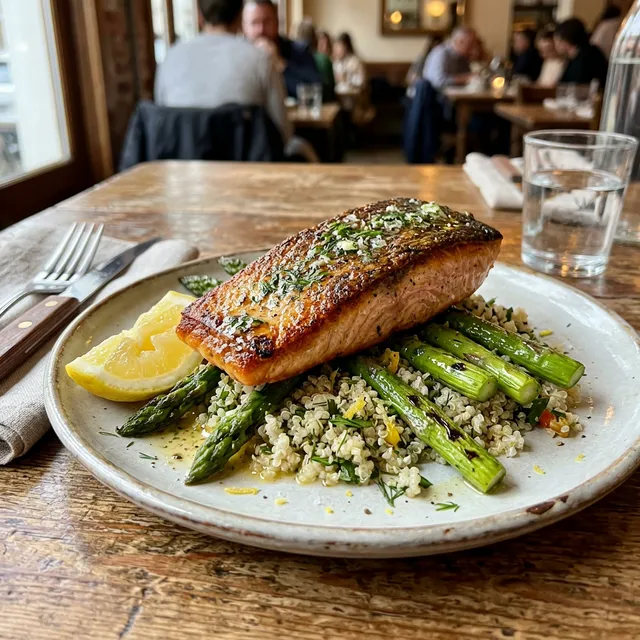
High-protein wild salmon with buttery lemon asparagus: crisp pan-fried wild salmon, green asparagus, quinoa, ghee and unwaxed lemon on a quick, high-protein plate.
At a glance
Serves 2
Prep time: 5 min
Cooking time: 15 min
Total time: 20 min
Calories: 450 kcal per serving
Protein: 34 g
Fat: 29 g
Carbs: 12 g
Ingredients
2 wild salmon fillets (premium quality)
1 cup of pre-cooked white quinoa
1 bunch of green asparagus
1 unwaxed lemon
Coarse sea salt
2 tbsp ghee
Black pepper
Method
You’ll need: microwave · frying pan · saucepan
Trim the woody ends from the bottom third of the green asparagus. Pat the wild salmon dry and season the flesh side with coarse sea salt and black pepper.
Heat a heavy frying pan until very hot and melt a little ghee in it. Place the wild salmon in skin side down and press down briefly so the skin makes even contact with the pan.
Reduce the heat and cook the wild salmon gently until it's almost cooked through and the colour turns paler towards the top. Only turn it onto the flesh side once, right at the end, and leave it briefly in the residual heat. In pregnancy, cook it on the flesh side until the salmon is cooked right through.
At the same time, fry the green asparagus all over in the remaining ghee in a second hot frying pan. Season to taste with lemon juice and a little sea salt.
Gently warm the pre-cooked white quinoa in a small pan or in the microwave and fluff it up with a fork.
Divide the quinoa and asparagus between plates, place the wild salmon on top and spoon the lemony ghee from the pan over the fish.
Good to know
A meal like this seems simple but looks rather special on the plate. Juicy, crisp, fresh – and ready in no time.
Swaps
White quinoa → millet (mild, also provides iron) | Ghee → olive oil (mainly monounsaturated fats) | Green asparagus → broccoli (also provides fibre and vitamin C) | Wild salmon → Arctic char (similar protein content, more delicate flavour)
Allergens
Contains fish and milk (ghee). For children, cut it into small pieces and watch out for bones; in pregnancy, only eat salmon that's cooked right through, so let it cook fully on the flesh side.
Frequently asked questions
Which omega-3 fatty acids are in wild salmon?
Mainly EPA and DHA. These are the long-chain omega-3 fatty acids for which oily sea fish is particularly valued nutritionally.
What nutrients does green asparagus contain?
It provides folate, vitamin K and some vitamin C, among other things. There's also fibre and other plant compounds, although their content varies with freshness and cooking time.
What makes quinoa interesting in this dish?
Quinoa brings complex carbohydrates, fibre and minerals such as magnesium and manganese. It also contains some protein, although the fish clearly provides most of the protein here.
Is ghee an option if you're sensitive to lactose?
Ghee contains only very small amounts of lactose and milk protein, so many people who are sensitive to lactose use it. If you have a genuine milk protein allergy, caution is still advisable.
Does lemon juice do more than add acidity here?
It provides vitamin C and fresh aroma compounds. Some survives brief heating and some is lost, so a little fresh lemon at the end makes sense for both flavour and nutrition.