
SmarTasty
Count calories with a photo
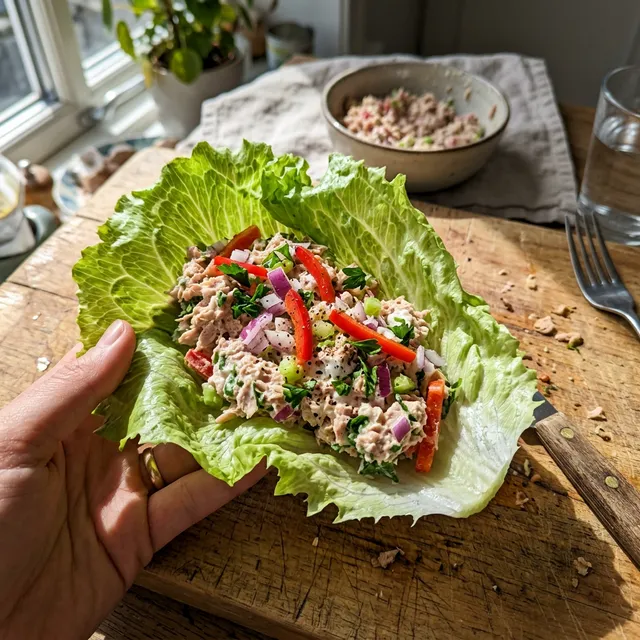
High-protein tuna lettuce wrap: a light wrap made from lettuce leaves with tuna, low-fat quark, red pepper, onion and lemon juice – fresh, protein-packed and quick to make.
You’ll need: chopping board · knife · sieve
When you want something light that still fills you up, this wrap is just right. Fresh, crunchy and pleasantly savoury. A meal like this feels effortless.
Low-fat quark or Greek yoghurt → skyr (a little more protein) Iceberg/romaine lettuce → cabbage leaves or large salad leaves such as lollo or radicchio (more bite, good as a wrap) Red pepper → cucumber or celery (fresher, crunchy, light)
Contains fish and, depending on your choice, dairy. Raw onion can taste quite sharp to children or sensitive people, and during pregnancy tuna is possible in normal amounts, but not ideal every day because of mercury. Contains: milk.
Tuna mainly provides selenium, iodine and vitamin B12. There are also smaller amounts of vitamin D and omega-3 fatty acids, depending on the species and processing.
Red pepper usually contains more vitamin C and carotenoids than green, because it's harvested riper. Nutritionally, the difference is genuinely relevant.
Both bring protein, calcium and a creamy texture. Greek yoghurt is often milder in flavour, while low-fat quark is usually a little firmer and tangier.
Not necessarily. Red onion contains certain carbohydrates and sulphur compounds that can cause bloating or a burning feeling in the stomach in sensitive people.
Tuna contains omega-3 fatty acids, but usually less than oily fish such as salmon, mackerel or herring. So for omega-3 it's solid, but not the strongest option.