
SmarTasty
Count calories with a photo
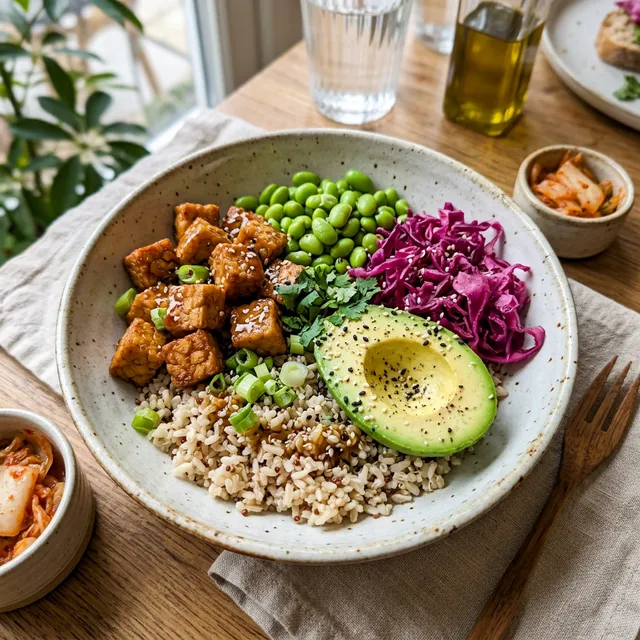
High-protein tempeh bowl with edamame and red cabbage: a satisfying bowl with tempeh, brown rice, avocado, edamame and fermented cabbage, finished with lime and soy sauce.
You’ll need: frying pan · chopping board · knife
A bowl like this is easy, yet really well rounded. Savoury, fresh and pleasantly tangy – exactly what I like in quick everyday meals.
Edamame beans → garden peas or young broad beans (similar protein and fibre content) Brown rice → quinoa or buckwheat (more minerals and a little more protein) Maple syrup → date paste or a little mashed date (sweetness plus a little fibre and minerals)
Contains soya and, depending on the soy sauce, gluten too. Usually suitable for children in small, mildly seasoned portions; during pregnancy, pasteurised fermented cabbage is the more cautious choice than raw fermented products.
Tempeh provides protein, fibre and minerals such as iron, magnesium and manganese. Fermentation changes the soya bean, which affects its flavour and texture.
Edamame contain folate, vitamin K, magnesium and potassium, among others. They also bring fibre and soya plant compounds such as isoflavones.
Fermented cabbage provides fibre and, depending on the product, vitamin C and vitamin K. Not every jar still contains many live cultures, especially if the product has been heated or heavily processed.
Avocado mainly contains monounsaturated fatty acids, plus potassium, folate and some vitamin E. So it adds to the bowl's mix of fats as well as its flavour.
Soy sauce brings sodium and aroma compounds from fermentation, and people who are sensitive to histamine react to it differently. Lime adds acidity, which some people prefer in smaller amounts.