
SmarTasty
Count calories with a photo
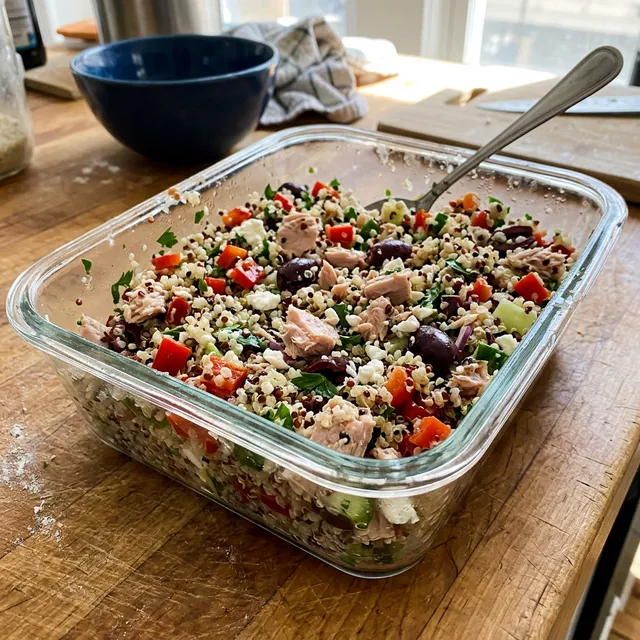
High-protein quinoa and tuna salad with quinoa, tuna, cucumber, pepper, Kalamata olives and sheep's cheese – hearty, fresh and easy for every day.
You’ll need: saucepan · chopping board · knife · mixing bowl · sieve
A salad like this is substantial but still fresh. It has bite, salt and acidity, and exactly the kind of simplicity you'll want to eat more often.
Tuna → tinned wild salmon (more omega-3, a similar amount of protein) Quinoa → cooked lentils (more fibre, plus protein) Sheep's cheese → cottage cheese (more protein, usually less fat) Balsamic vinegar → lemon juice (fresh flavour, without added sugar)
Contains fish and milk. Onion can cause discomfort for sensitive people. Because of possible mercury, children should only eat tuna in moderation; in pregnancy, limit tinned tuna, as the NHS advises, and use sheep's cheese made from pasteurised milk.
Tuna mainly provides protein as well as vitamin B12, selenium and iodine. Depending on the species and fishing area, it can also contain some omega-3.
Washing and cooking it well matters: the saponins on the surface can taste bitter if the quinoa is raw or not washed properly, and can irritate some stomachs.
Red pepper contains vitamin C and various carotenoids. Red onions contain fibre and sulphur-containing plant compounds; in this salad, the onion sits in the dressing briefly first so it becomes milder.
Olive oil mainly contains monounsaturated fats plus small amounts of vitamin E and polyphenols. The exact polyphenol content varies a lot with variety and processing.
Not necessarily. Some people feel they get on with it better, but it still contains milk protein and usually some lactose, with the amount depending on ripening.