
SmarTasty
Count calories with a photo
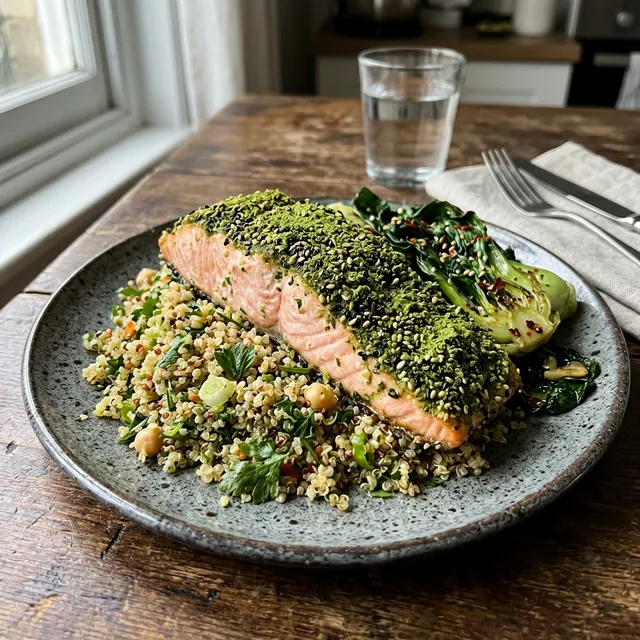
High-protein matcha wild salmon with quinoa: a high-protein recipe with wild salmon, matcha, quinoa, pak choi, sesame and lemon for a balanced meal.
You’ll need: frying pan · saucepan · chopping board · knife · spatula
When it has to be quick but should still taste good, this dish is just right. Warm, fresh and pleasantly savoury, with a delicate green note.
Wild salmon → trout (similar protein content, also with omega-3 fatty acids). Quinoa → buckwheat (more variety, naturally gluten-free). Pak choi → broccoli (more fibre and vitamin C). Avocado oil → olive oil (mainly monounsaturated fats).
Contains fish, sesame and soya. Only small amounts for children because of the caffeine in matcha. In pregnancy, cook the salmon right through and count the matcha: no more than 200 mg of caffeine a day from all sources combined. Contains: gluten (soy sauce).
Wild salmon provides protein and omega-3 fatty acids. Depending on where it comes from, it also contains vitamin D, vitamin B12, selenium and iodine.
Matcha brings bitter, slightly grassy notes and contains natural caffeine and catechins from green tea. How much these matter nutritionally depends heavily on the amount and your diet as a whole.
Quinoa provides complex carbohydrates, fibre and minerals such as magnesium and manganese. It also adds a different amino acid profile from fish, although the salmon provides most of the protein here.
Lightly cooked pak choi is often milder than raw. At the same time, its flavour, texture and some of the heat-sensitive vitamins are better preserved than with long cooking.
Soy sauce adds depth and umami, but also a lot of salt, and isn't suitable if you have a soya allergy. Sesame adds flavour and minerals, but it's one of the more common allergens and should be avoided if you know you're sensitive to it.