
SmarTasty
Count calories with a photo
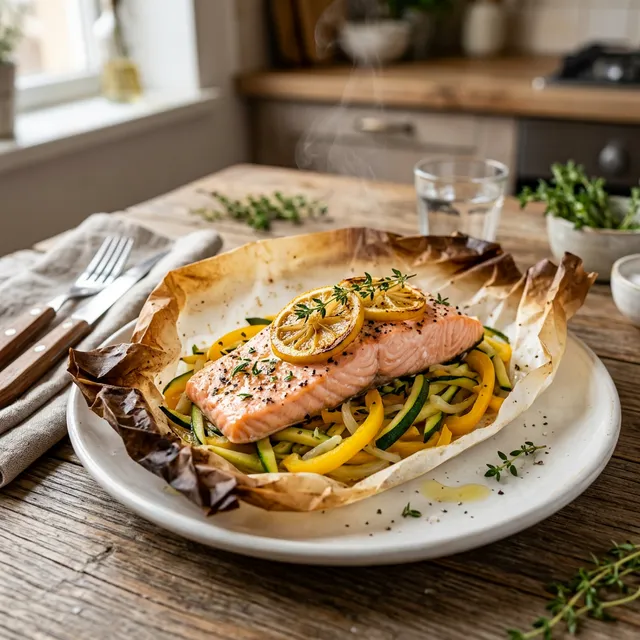
High-protein lemon wild salmon fillets baked in paper: tender wild salmon with courgette, yellow pepper, unwaxed lemon, thyme and olive oil, straight from the oven.
You’ll need: oven · baking tray · chopping board · knife
A dish like this makes no fuss and still tastes of a lot. The salmon stays juicy, the veg soft with a bite, and the lemon brings just the right freshness.
Wild salmon fillets → Arctic char fillets (similar protein content, milder flavour, also great en papillote) Courgette → green asparagus (more bite, more fibre, goes really well with lemon and thyme) Yellow pepper → fennel (more aromatic, especially good with fish and lemon) Olive oil → avocado oil (heat-stable, mild in flavour, not a seed oil)
The recipe contains fish as an allergen. It's generally well suited to children if you remove the bones carefully, and well-cooked salmon is common during pregnancy; with wild-caught fish, iodine levels can vary depending on where it comes from.
Wild salmon mainly contains long-chain omega-3 fatty acids such as EPA and DHA. The amount varies with the fishing ground and season, but in salmon it's always significant.
Lemon mainly provides vitamin C and various plant compounds from the zest and juice. The exact amounts in the finished dish stay modest, because you only actually eat part of it.
Yellow pepper also contains vitamin C and carotenoids, but usually in a slightly different mix from red pepper. The colour mainly shows a different stage of ripeness and a different range of plant pigments.
Courgette is generally considered mild, especially when cooked. With a very sensitive gut, raw pepper tends to be more noticeable than courgette, though this varies from person to person.
Thyme contains essential oils and smaller amounts of plant compounds. In the usual kitchen amounts, flavour clearly comes first. It suits salmon.