
SmarTasty
Count calories with a photo
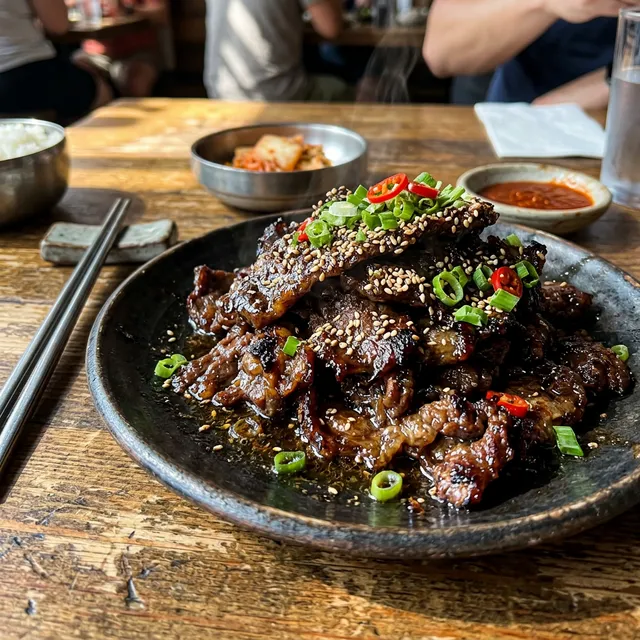
High-protein Korean beef bulgogi with beef, soy sauce, nashi pear, garlic and sesame oil – full of flavour, juicy and quickly fried in the pan.
You’ll need: frying pan · wok · chopping board · knife · mixing bowl · grater
Bulgogi is one of those dishes that tastes of far more than the effort it takes. The marinade is deep and rounded, just right between salty and gently sweet.
1 tbsp toasted sesame oil → 1 tbsp avocado oil or extra ghee (more heat-stable fats) 2 tbsp dark maple syrup/honey → 2 tbsp date paste or 1–2 tbsp coconut aminos (fewer free sugars, a few more micronutrients) 4 tbsp dark soy sauce → 4 tbsp reduced-salt tamari or coconut aminos (often gluten-free, usually a little milder and sometimes less sodium; tamari contains soya) 1 small white onion → 1 small red onion or shallots (more polyphenols, slightly more aromatic)
Contains soya and sesame; honey isn't suitable for babies under 12 months, and in pregnancy the beef should be cooked right through. Contains: gluten (soy sauce), milk.
Beef provides iron, zinc, vitamin B12 and protein. The fat content varies a lot depending on the cut.
Soy sauce mainly brings sodium, plus small amounts of amino acids from fermentation. It's very salty, so it's worth using it mindfully.
Sesame seeds contain unsaturated fats, some protein and minerals such as calcium, magnesium and copper. As the amount in the recipe is fairly small, their contribution stays modest.
Not always. Garlic and onion contain FODMAPs, which can cause symptoms such as wind in people with a sensitive gut or IBS.
It provides some vitamin C, water and small amounts of fibre. In this recipe, the amount matters more for cooking than for nutrition.