
SmarTasty
Count calories with a photo
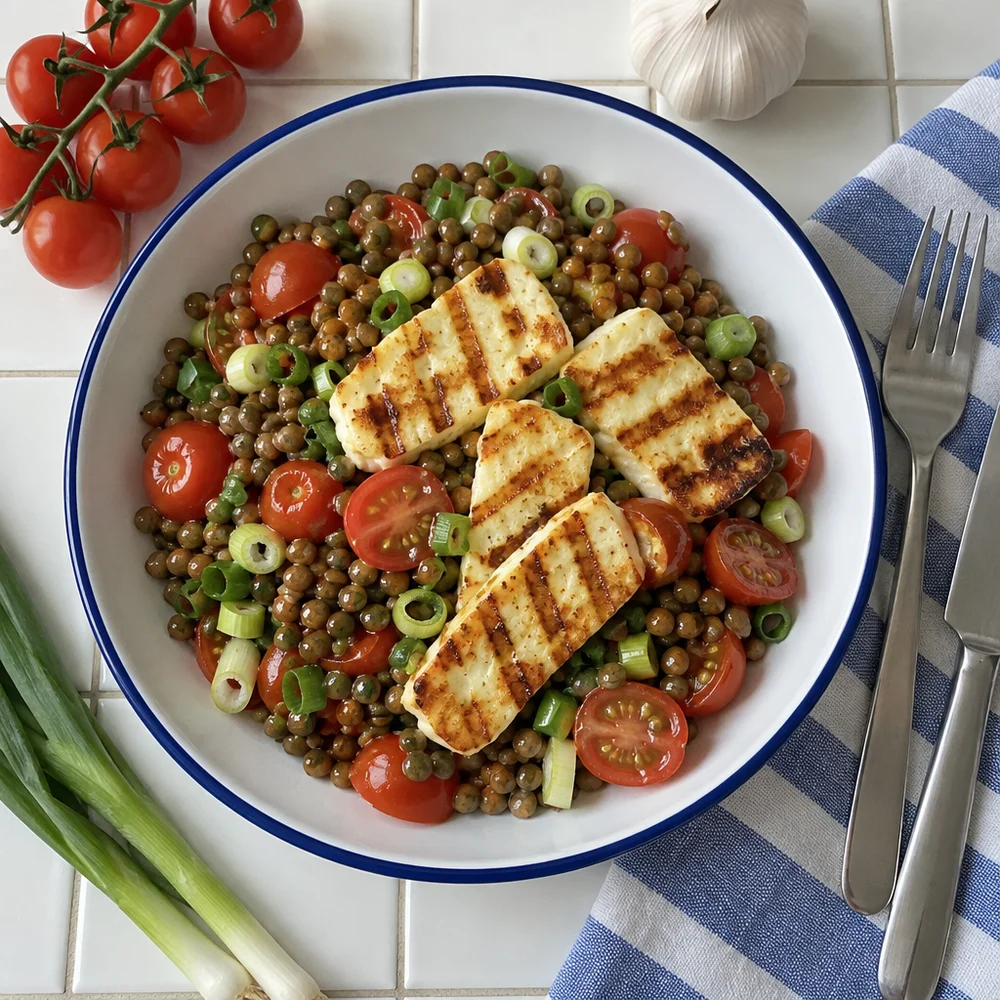
High-protein grilled halloumi with lentil and tomato salad: savoury halloumi, brown lentils, cherry tomatoes, garlic and balsamic in a quick, satisfying dish.
You’ll need: frying pan · saucepan · chopping board · knife · sieve · spatula
When it needs to be quick but should still taste like a proper meal, this dish is a good choice. Warm, savoury and with plenty of bite. Exactly the kind of plate that's easy and satisfying.
Halloumi → sheep's cheese or plain goat's cheese (often a little less salt and usually a little less processed) Ghee → extra virgin olive oil or grass-fed butter (works well for frying over a medium heat, no seed oils) Dark balsamic vinegar → fresh lemon juice or cider vinegar (usually less sugar, fresher flavour) Tinned brown lentils → home-cooked Puy-style lentils (fewer additives, easier to control the bite and salt)
Halloumi contains milk, so it isn't suitable for people with a milk protein allergy (the ghee also contains milk). Because it's salty and firm, give young children only suitably sized pieces; during pregnancy, pasteurised halloumi is generally fine.
Brown lentils provide fibre, plant protein, folate, iron, magnesium and potassium. The exact amounts vary a little by variety and processing.
Yes, halloumi is usually much saltier than many other cheeses. If you're sensitive to salty food, go very easy on extra salt in the rest of the dish.
Garlic contains sulphur compounds such as allicin, which are responsible for its aroma and typical sharpness. Cooked gently with the tomatoes, it turns milder and rounder.
That varies from person to person. With a sensitive stomach or reflux, the acidity and skins can play a role here too.
Lentils provide iron, folate and magnesium, among others, and halloumi adds protein, calcium and vitamin B12. The result is a dish with a broad mix of nutrients.