With your consent, we use Google Analytics to improve SmarTasty. Data may be transferred to the USA. You can withdraw at any time. · Privacy
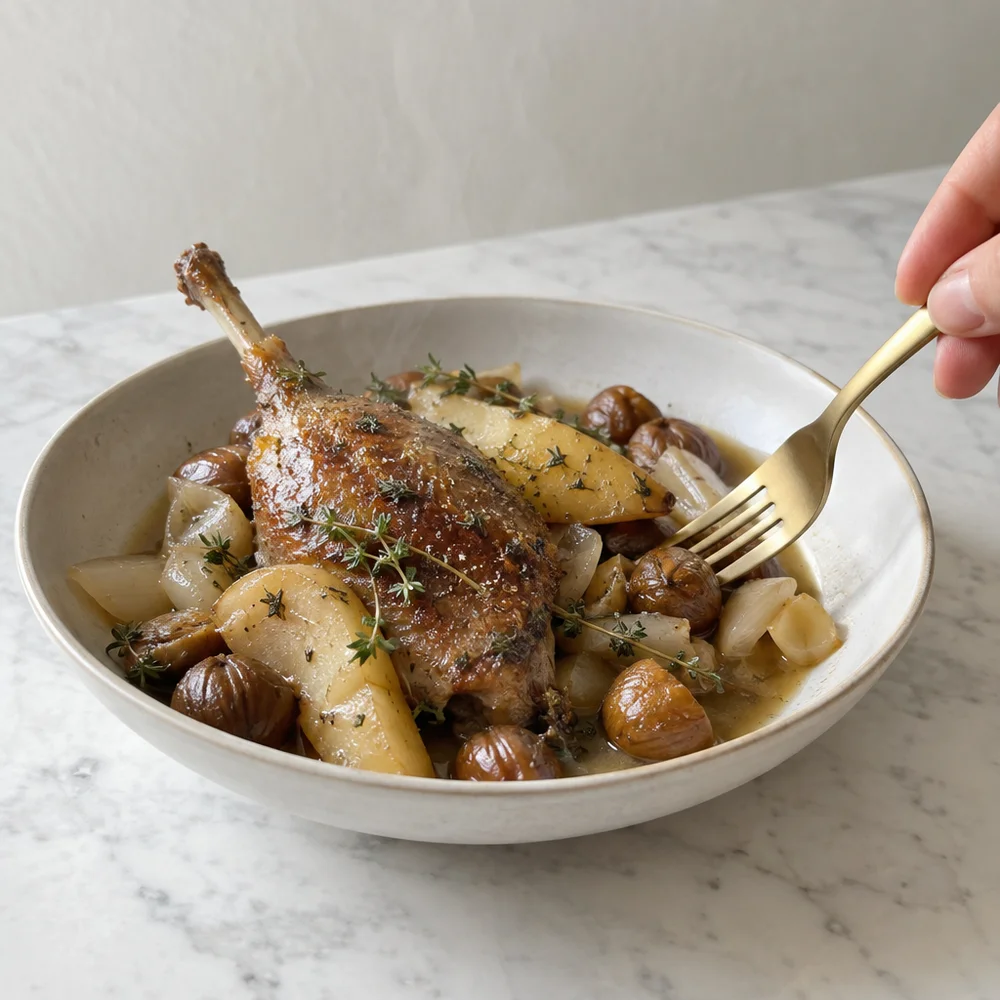
High-protein duck legs with chestnuts, pears and thyme
High-protein duck legs for St Martin's Day, braised with chestnuts, pears, onions and thyme in poultry stock. A St Martin's Day dinner with 36 g of protein per serving.
Preheat the oven to 170 °C (150 °C fan). Rub the duck legs with salt and pepper and fry them skin side down in a casserole for 8 minutes, until the fat runs.
Pour off all but one tablespoon of the fat. Cut the onions into wedges and fry them in the casserole for 3 minutes.
Lay the legs skin side up on the onions, pour in the stock, add the thyme and cook everything in the oven at 170 °C for 60 minutes.
Quarter the pears and remove the cores. Arrange the pears and chestnuts around the legs and cook everything for a further 25 minutes at 170 °C.
Take out the legs, skim the fat off the braising liquid, reduce it in a pan for 5 minutes and season to taste with salt and pepper.
Serve the legs with the pears, chestnuts and sauce.
Good to know
A duck for St Martin's Day doesn't have to spend all day in the oven: legs braise in a good hour and a half. Chestnuts and pears cook in the juices and are the side dish too. Braised red cabbage with apple and potato dumplings go well with it.
Swaps
Duck legs → goose legs (30 minutes longer). Chestnuts → parsnips. Pears → apples. Thyme → rosemary.
Cooking tips
Save the poured-off duck fat for fried potatoes. The legs are done when the meat comes away easily from the bone.
Storage
Keeps for 3 days in the fridge; reheat in the oven at 180 °C for 20 minutes.
Allergens
Gluten-free, no milk, egg or nuts; poultry stock may contain celery. Suitable for children and in pregnancy – cook the meat right through.
Frequently asked questions
How long do duck legs keep in the fridge?
Keeps for 3 days in the fridge; reheat in the oven at 180 °C for 20 minutes.