
SmarTasty
Count calories with a photo
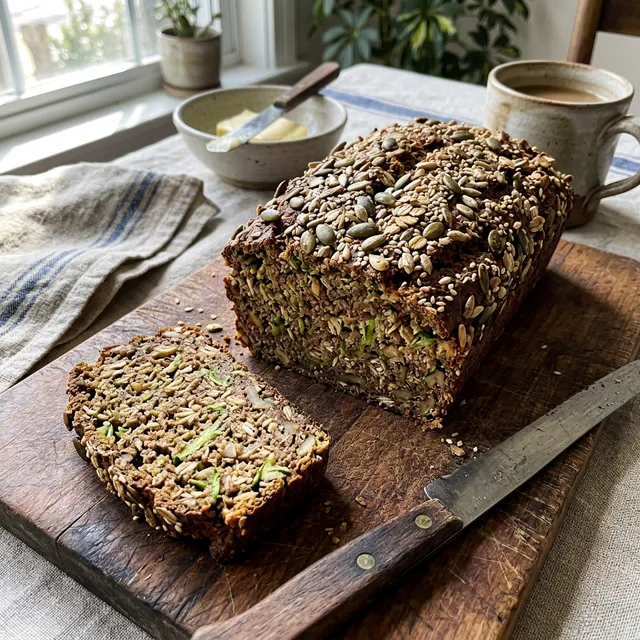
Gluten-free oat and courgette bread with gluten-free oats, courgette, eggs and almond flour – moist, nutty and easy to fit into breakfast or a snack.
You’ll need: oven · loaf tin · chopping board · knife · mixing bowl
This bread is moist, mild and pleasantly uncomplicated. It goes just as well with savoury toppings as simply with a little butter or cream cheese. And it feels more like real bread than a compromise.
Gluten-free oats → buckwheat flakes (gluten-free and a little more savoury in flavour) Fine almond flour → a smaller amount of coconut flour (fewer carbs and more fibre; it soaks up a lot of liquid, so use much less) Pumpkin seeds or sunflower seeds → chopped walnuts or hazelnuts (more monounsaturated fats, aromatic crunch) Olive oil → melted ghee or grass-fed butter (stable at high heat and fuller flavour)
Contains egg and almonds and, depending on your choice, pumpkin or sunflower seeds; suitable for children in soft slices, and unremarkable during pregnancy as long as the eggs are well baked – and for coeliac disease, the gluten-free oats must be explicitly labelled as such.
Oats provide complex carbohydrates, fibre and minerals such as manganese, magnesium and iron, plus B vitamins, especially thiamin.
Courgette brings lots of water, some potassium and smaller amounts of vitamin C. It makes the dough moister without standing out in flavour.
Almond flour and pumpkin or sunflower seeds contain unsaturated fats, vitamin E and minerals such as magnesium and zinc. Pumpkin seeds usually provide a little more zinc, sunflower seeds often more vitamin E.
Yes, olive oil mainly adds monounsaturated fats and keeps the crumb pleasantly soft. In this amount the flavour usually stays mild and rounded.
Both contain a range of nutrients, but with a slightly different focus. Sunflower seeds contain more vitamin E, pumpkin seeds rather more magnesium and zinc.