
SmarTasty
Count calories with a photo
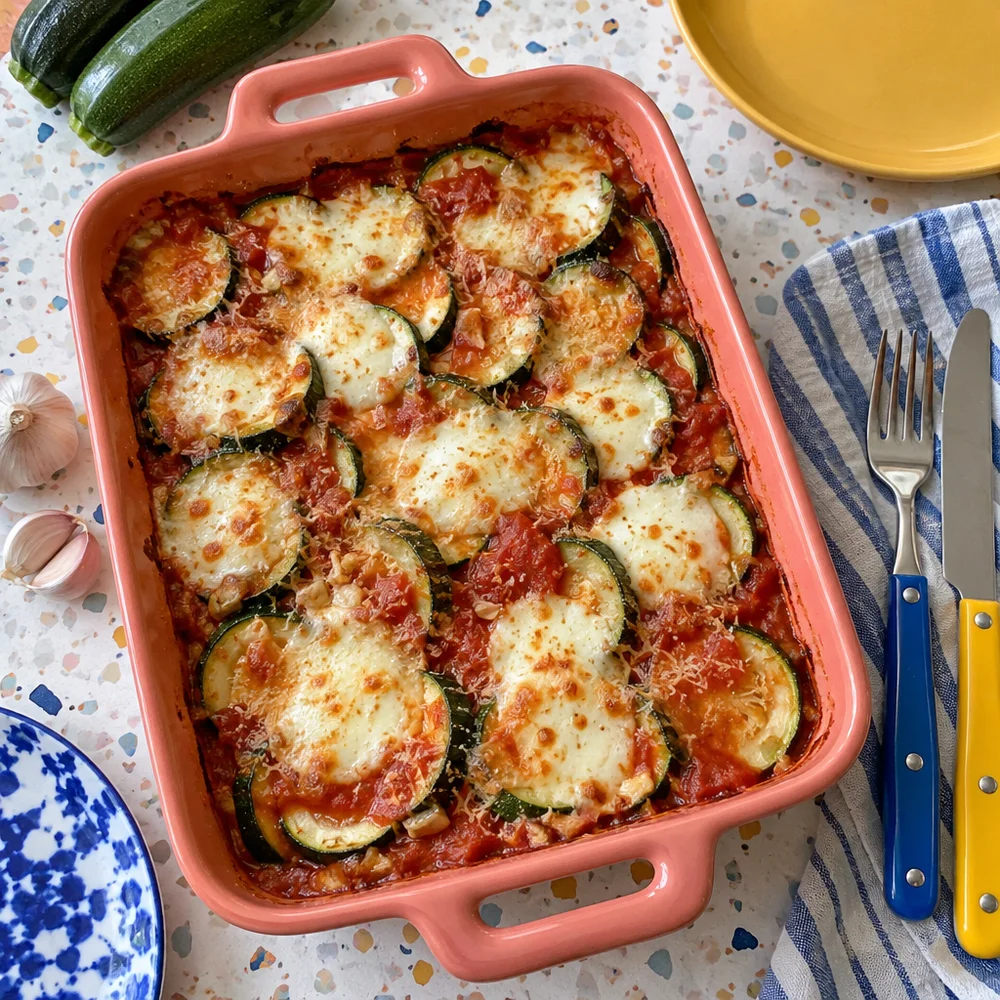
Gluten-free courgette and parmesan bake with passata, mozzarella, parmesan, garlic and basil – savoury, juicy and easy from the oven.
You’ll need: oven · baking dish · chopping board · knife
A bake like this is a simple pleasure. Warm, full of flavour, golden brown and just right when you want something savoury without much effort.
Mozzarella → buffalo mozzarella (usually a little more protein and calcium) | Parmesan → pecorino made from sheep's milk (stronger flavour, similar protein content) | Olive oil → avocado oil (heat-stable, mainly unsaturated fats) | Passata → unsweetened chopped tomatoes (a little more texture and fibre)
Contains milk (mozzarella and parmesan). Usually fine for children if the garlic and seasoning stay mild; in pregnancy, only use pasteurised dairy.
Courgettes contain lots of water, some fibre and smaller amounts of vitamin C, potassium and folate. They're mild in flavour.
As well as intense flavour, parmesan provides calcium, phosphorus, protein and vitamin B12. Thanks to ripening, it usually contains very little lactose.
Tomatoes provide vitamin C, potassium and lycopene. In this bake, they go in as passata, stirred with garlic, oregano and a little olive oil, and are baked until the top is browned.
That depends on the product: mozzarella usually contains less lactose than many soft fresh cheeses, but not necessarily none at all. If you're sensitive, check the label.
Garlic and herbs bring small amounts of plant compounds and essential oils. Their contribution is more of an extra than central, but they make the dish more aromatic without sugar or heavily processed additives.