
SmarTasty
Count calories with a photo
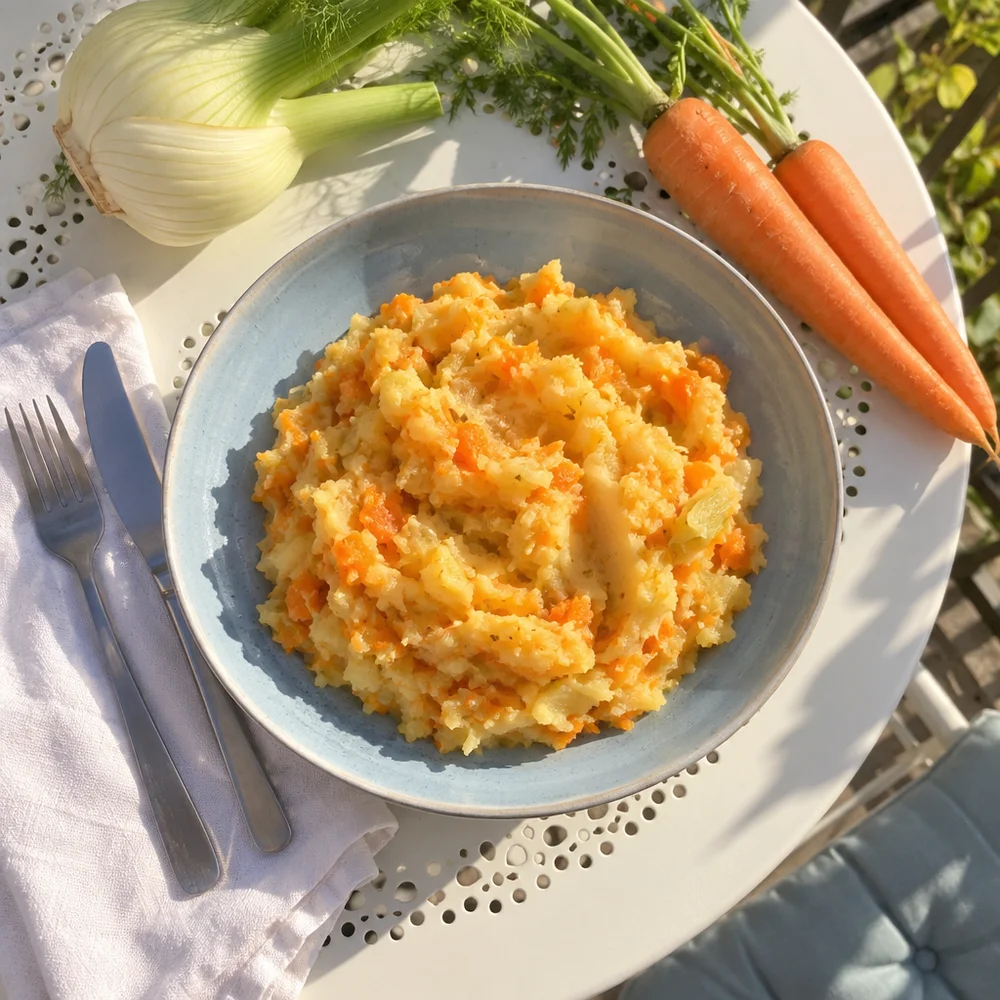
FODMAP-friendly fennel and carrot mash with fennel, carrots, potato, ghee and dill – mild, creamy and pleasantly aromatic for simple, light cooking.
You’ll need: saucepan · stick blender · chopping board · knife · sieve
A mash like this is quiet but never boring. Warm, mild and soft in texture – just right when you want something uncomplicated.
Potato → celeriac (less starch, stays creamy) Carrots → a small amount of parsnip (milder, slightly sweet) Ghee → organic grass-fed butter (similar flavour, uncomplicated) Dill → chives (fresh, mild and FODMAP-friendly in normal amounts)
With ghee or butter, the recipe contains milk; ghee is often very low in lactose, but not dairy-free. Usually suitable for children – use nutmeg sparingly; during pregnancy the kitchen amounts of the ingredients are unremarkable.
Fennel is often considered a mild vegetable, and small portions are often well tolerated. On a low-FODMAP diet, individual tolerance can still vary, so portion size matters.
Carrots mainly provide beta-carotene, the precursor of vitamin A, as well as fibre and some potassium.
The potato mainly acts as a binder here and makes the texture creamier. It mainly provides starch and potassium and, in a small amount, stays subtle in flavour.
Dill is usually used in small amounts, so its contribution of vitamins and minerals is rather modest. But it brings characteristic aromatic plant compounds that make the dish taste fresher.
Ghee usually contains less lactose and fewer milk protein residues than butter, which is why some people get on with it better. If you have a genuine milk protein allergy, it's still best to be careful.