
SmarTasty
Count calories with a photo
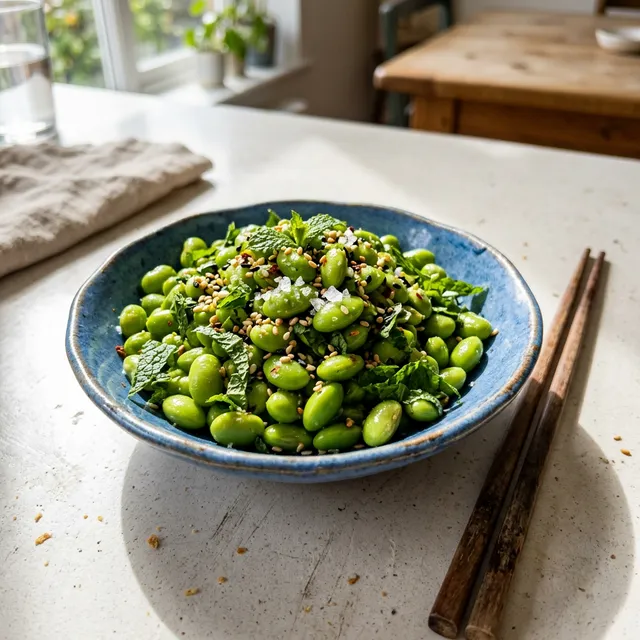
Edamame and mint side dish with edamame, fresh mint, sesame oil, white sesame seeds and lime juice – a quick, aromatic side with plant protein.
You’ll need: saucepan · mixing bowl · sieve
Some side dishes are understated but make themselves known straight away. This one is fresh, bright and brings exactly the kind of contrast that rounds off a meal.
Sesame oil → extra virgin olive oil (savoury, goes well with mint) White sesame seeds → chopped macadamias (crunchy, mild and seed-free; contains tree nuts) Frozen shelled edamame → peas or young broad beans (similar protein content and slightly sweet) Lime juice → lemon juice (fresh, tangy and usually easier to find)
Contains soya and sesame, both common allergens. Usually well suited to children if the texture is safe for them, and generally fine to eat in pregnancy, as long as soya and sesame suit you.
Edamame contain folate, vitamin K, iron, magnesium and potassium, among other things. The exact values depend on the product and how it's prepared.
White sesame mainly brings unsaturated fatty acids, plus minerals such as calcium, copper and magnesium. Toasted sesame tastes more intense, and the nutrient content can change slightly in the process.
Sesame oil mostly contains unsaturated fatty acids, mainly omega-6 and oleic acid. For omega-3, it doesn't play a significant role.
Edamame contain fibre and certain carbohydrates that not everyone gets on with equally well. Small portions are often more comfortable than very large ones.
Mint is usually eaten in small amounts, so its contribution of vitamins and minerals is fairly modest. Here, its value lies mainly in its fresh aroma.