
SmarTasty
Count calories with a photo
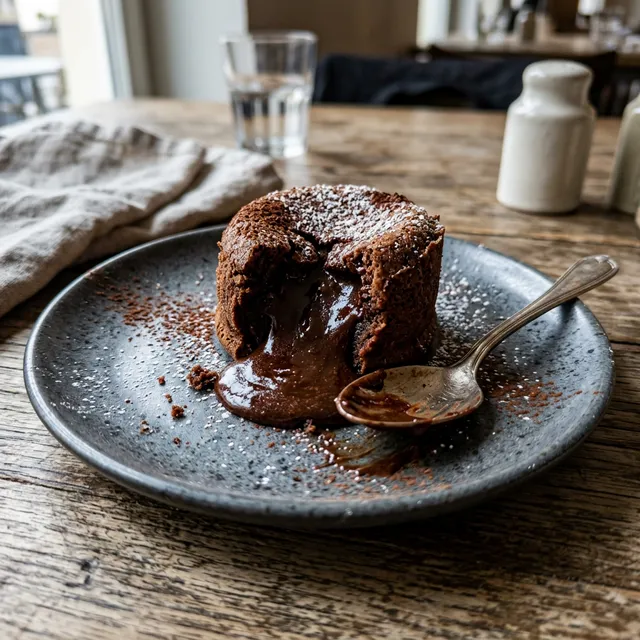
Chocolate lava cakes with a molten centre: dark chocolate, eggs, butter, honey and a little flour make a warm dessert with a soft middle and an intense cocoa flavour.
You’ll need: oven · mixing bowl
Delicately baked outside, still soft and melting inside. This little cake feels like a special dessert without being complicated.
Plain flour → almond flour (provides protein, less starch; contains tree nuts) Honey → date paste (also provides fibre) Dark chocolate → chocolate with 100% cocoa (unsweetened, much more bitter) Butter for greasing → ghee (heat-stable, aromatic)
Contains egg, milk and gluten; dark chocolate may contain traces of nuts or soya. For children only in small portions because of the caffeine and theobromine in cocoa, and no honey for babies under one year old. In pregnancy, bake the cakes until firm all the way through – no runny centre.
It usually contains more cocoa mass and less sugar than paler types. That's why it often contains more magnesium, iron and cocoa compounds such as flavanols, although the values differ from brand to brand.
Eggs contain protein as well as choline, vitamin B12, selenium and a little vitamin D. The yolk also provides fat and fat-soluble vitamins.
Besides sugar, honey contains small amounts of other compounds, such as enzymes and traces of minerals. Overall, the difference is modest, but honey brings more depth of flavour.
Butter gives the little cakes a classic flavour and a firm, creamy texture. Nutritionally, it mainly provides saturated fatty acids and a little vitamin A, while oils have a different fatty acid composition.
That varies a lot from person to person: cocoa contains caffeine and theobromine, among other things, which sensitive people may notice. With reflux, a sensitive stomach or histamine issues, dark chocolate can sometimes be less suitable.