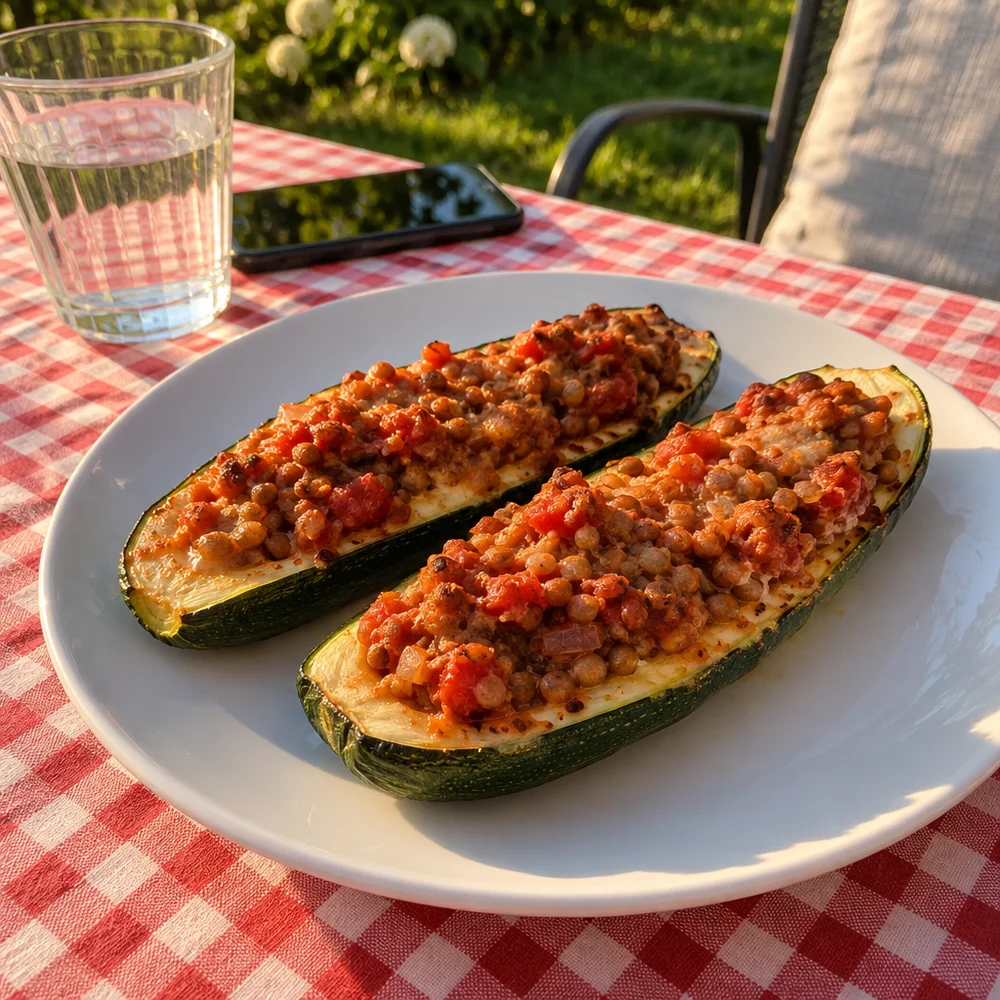
Preheat the oven to 200 °C (180 °C fan) and have a baking tray or baking dish ready. Halve the courgettes lengthways and carefully scoop out the soft centre with a spoon.
Salt the courgettes lightly and pre-bake them cut side up at 200 °C for 10–15 min; prepare the filling in the meantime. Finely chop the shallot and garlic and cook them gently in the olive oil until soft and translucent.
Add the lentils, toast them briefly and deglaze with the balsamic. Stir in the chopped tomatoes and herbes de Provence and let everything simmer until the lentils are soft and the sauce is thick.
Take the courgettes out of the oven and fill them evenly with the lentil bolognese. Spread the cheese over the top.
Bake the filled courgettes at 200 °C for another 10–15 min, until the cheese has melted and browned slightly. Let them rest briefly so the filling firms up a little.
To serve: bring the courgette boats to the table hot, with a few extra herbs or a small dash of balsamic if you like.
Good to know
A bake like this doesn't make a fuss and still feels like a proper meal. Juicy, well seasoned, warm. Just what you want on the table after a long day.
Swaps
Processed cheese → mozzarella or grated Alpine cheese (usually a shorter ingredient list, also provides protein and calcium). Shallot → red onion (similarly aromatic, also provides fibre). Lentils → red lentils (shorter cooking time, still plant protein and fibre). Balsamic vinegar → lemon juice (fresher acidity).
Allergens
Contains milk (cheese). Usually fine for children if the garlic and acidity are kept mild; in pregnancy, use pasteurised dairy products.