
SmarTasty
Count calories with a photo
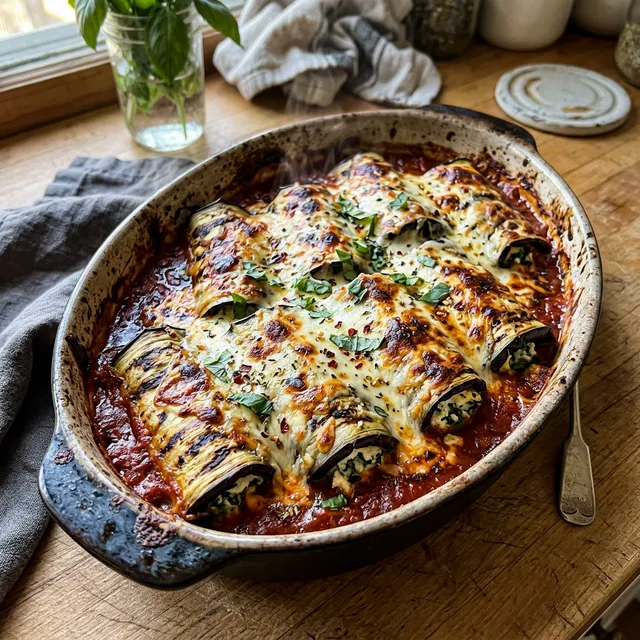
Aubergine cannelloni with spinach and ricotta, tomato passata and mozzarella: hearty, satisfying and with few carbs for a warm oven bake.
You’ll need: oven · frying pan · baking dish · chopping board · knife · grater
This dish feels like proper comfort food without being heavy. Soft, well-seasoned and straight from the oven, just how you want it on a busy day.
Ricotta (full-fat) → cottage cheese or skyr (more protein, a little tangier) Mozzarella → buffalo mozzarella or goat's cheese (often a stronger flavour) Tomato passata → unsweetened chopped tomatoes (more texture, often less processed) Aubergine → courgette slices cut lengthways (milder and more delicate)
Contains dairy, so it's not always suitable for people with a milk protein allergy or, in some cases, lactose sensitivity; for children and in pregnancy it's generally fine if you use pasteurised ricotta and pasteurised mozzarella.
Spinach mainly provides folate, vitamin K and carotenoids. It also contains smaller amounts of magnesium, potassium and plant-based (non-haem) iron.
Usually yes, especially when cooked. It contains fibre and relatively little sugar, but raw or undercooked it can taste bitter and may bother sensitive people.
Tomato passata contains vitamin C and lycopene, among other things – a red plant compound from the carotenoid group. Depending on the product, its acidity can vary, which can matter if you have a sensitive stomach.
Ricotta is often milder and softer than very mature cheese but still provides milk protein and calcium. How well it agrees with you depends on your individual tolerance of lactose and milk protein.
Mozzarella brings protein, calcium and a juicy texture. Firm mozzarella usually releases less water when baked than very fresh varieties, so the sauce stays thicker.