
SmarTasty
Count calories with a photo
What to eat 1 to 3 hours before exercise, which small snack works shortly before, how much protein to have afterwards, plus drinks and rest days.
What works before and after exercise, how much protein sports nutrition societies suggest, how to think about drinks and what to do on rest days. For everyday exercise, normal food is enough – you don’t need powders or bars.
Before exercise, go for a meal you tolerate well: with carbs, some protein and not too much fat or fibre. A heavy, fatty meal shortly before sits heavily for many people when they run or jump.
Try out what suits you. If you easily get a rumbling tummy during exercise, leave more time between eating and training.
After exercise, a meal with protein and carbs works well – the easiest option is your next main meal. The International Society of Sports Nutrition (ISSN) suggests about 20 to 40 g protein per meal, spread over several meals a day (ISSN 2017).
| Food | Protein |
|---|---|
| 250 g low-fat quark | about 30 g |
| 150 g chicken breast | about 35 g |
| 3 eggs | about 20 g |
| 200 g cooked lentils | about 18 g |
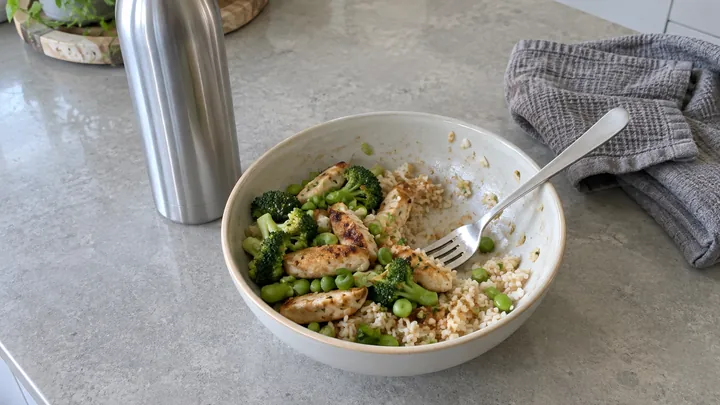
Ideas for afterwards: rice with chicken and veg, new potatoes with herb quark, wholewheat pasta with lentil bolognese, an omelette with wholegrain toast, or oats with skyr and berries.
Whether you eat straight away or an hour or two later matters little for most people. What you eat over the whole day counts more (ISSN 2017). To work out roughly how much protein you need a day, use the protein calculator.
Meals that fit: post-workout meals with at least 25 g protein and 30 g carbs per serving.
Drink throughout the day, then you don’t need to catch up before exercise. For most sessions up to about an hour, water is enough. If you sweat a lot, train for longer or it’s hot, drink during your session and more than usual afterwards (American College of Sports Medicine 2007).
On days without training, simply eat as usual. Protein still belongs in your meals on rest days. You don’t need to cut carbs. Maybe you’re a bit less hungry on rest days – then eat a little less.
In the SmarTasty app you log exercise in two steps. First pick the activity on Today under “Body”: running, cycling, strength training, yoga, swimming, walking or something else. Then set the duration and effort: easy, moderate or hard. The app estimates the kcal using MET values from the Compendium of Physical Activities.
Logged kcal don’t raise your daily goal. That way nothing counts twice and a rough estimate doesn’t shift your goal. If you’ve connected Apple Health or Health Connect, your watch’s active energy can be added.
Recipes for training days: every recipe with at least 20 g protein per serving
A light meal with carbs and some protein 1 to 3 hours before, for example porridge with yoghurt and banana. Shortly before, a small snack such as a banana at most.
A meal with protein and carbs, such as rice with chicken and veg, new potatoes with herb quark or wholewheat pasta with lentil bolognese.
The International Society of Sports Nutrition suggests about 20 to 40 g per meal. That’s roughly 250 g of low-fat quark or 150 g of chicken breast.
No. For most people the next normal meal is enough. What you eat over the whole day matters more.
A short, easy session works without breakfast. Before long or hard sessions, many people feel better with a small snack. If you feel dizzy, eat something.
No. A shake is handy when you’re short of time. Normal food gives you the same protein.
Kcal you log yourself don’t. If you’ve connected Apple Health or Health Connect, your watch’s active energy can raise your daily goal.