
SmarTasty
Count calories with a photo
Dragon fruit (pitaya) grows on a cactus and is almost always imported. Scoop out the mild flesh with its tiny black seeds, or add it to bowls and smoothies.
Hardly any fruit looks as strange, artificial and downright alien as this one: the round, leathery, scaly, bright neon-pink pitaya (or dragon fruit; Hylocereus polyrhizus). Ironically, it doesn't grow in a gentle European orchard, but on huge, climbing, night-flowering cacti with tough, thorny stems in hot, dusty semi-deserts. Cut the fruit open and you'll find juicy, jelly-like flesh – bright magenta or snow-white, and speckled with countless tiny black seeds.
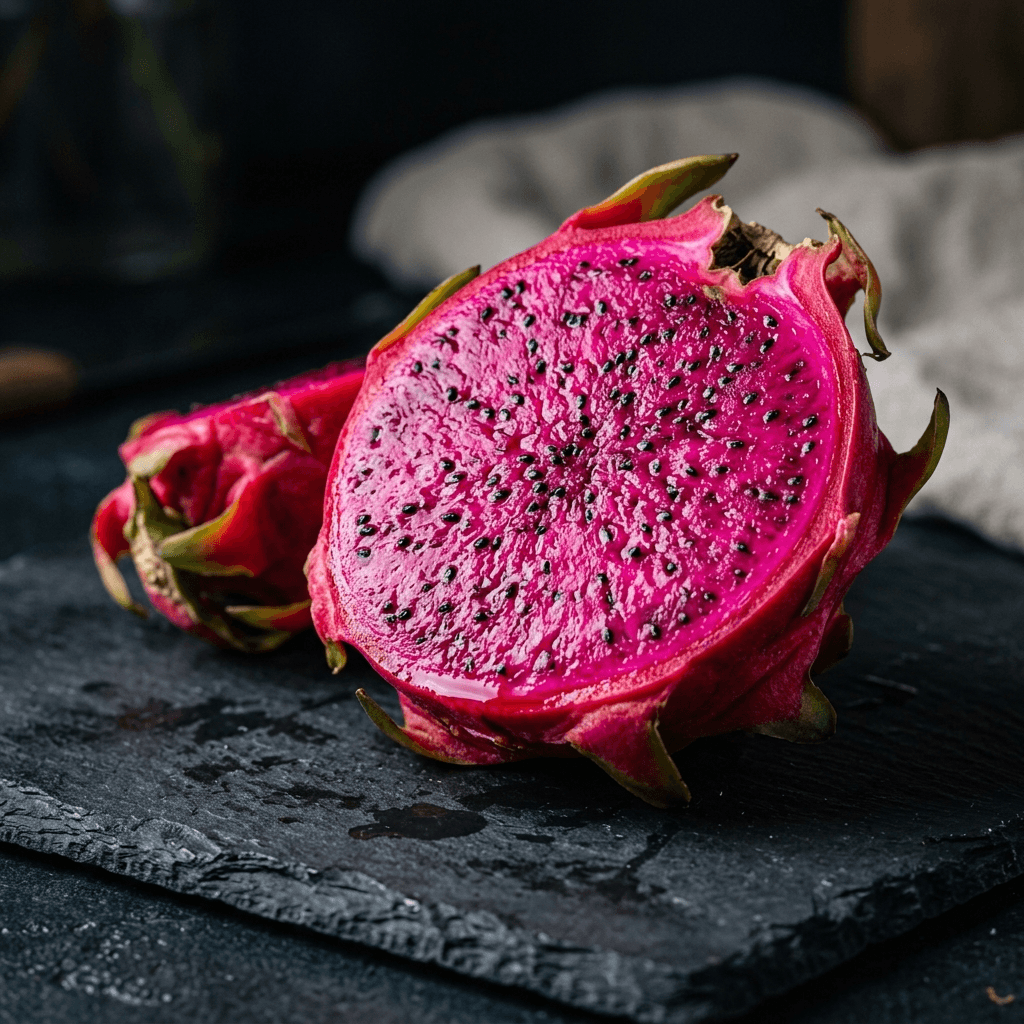
Even in the pricey organic aisle, skip the white-fleshed pitaya – it tastes bland and watery, a bit like mild cucumber water. Go for the deep pink to burgundy fruit instead (pink pitaya / red dragon fruit):
Plant (non-haem) iron – from kale, for example – is absorbed less well than iron from meat. Dragon fruit contains plant iron together with vitamin C. Vitamin C in the same meal increases how much iron the body absorbs from plant foods.
Take a closer look at the pink flesh: it's full of tiny black seeds. You eat them along with the flesh – they're soft with a slight crunch, and together with the flesh they add fibre and lots of water.
A classic shock moment: if you eat a really big bowl of red dragon fruit – say a 1,400-gram smoothie bowl – your urine can turn bright pink to red about eight hours later. There's no need to rush to A&E in fear of something serious. It's simply the plant pigment betalain, which passes through your kidneys unchanged. It's a harmless colour, not blood.